
Ongoing deforestation in tropical forests, extensive climate-driven forest fires in the Northern Hemisphere, and the effects of forest degradation and land use change are weakening natural carbon sinks worldwide according to new data from CTrees, a science nonprofit in California that uses remote sensing and AI to measure changes of carbon in forest and non-forest ecosystems globally.
The data from CTrees assess forest extent, live biomass carbon stocks, and emissions and removals from land use change activities for 263 countries and territories. Spanning 2000 to 2023, it is the only dataset that provides annual, global-scale mapping of land carbon changes, all based on peer-reviewed science. The data is available for anyone to explore in an open platform called Jurisdictional MRV.
Sassan Saatchi, Ph.D., CTrees’ co-founder and CEO said: “Natural carbon sinks are vital to remove emissions from the atmosphere each year, but forests and other ecosystems on land are losing this crucial capacity due to both direct and indirect human pressures. Deforestation and degradation, as direct impacts show no boundaries, affecting tropical, temperate, and boreal forests alike. Rising temperature and frequent droughts intensify these impacts, driving large-scale fires and tree mortality, that further weaken the planet’s land carbon sink. While there are encouraging signs of progress, world leaders must prioritize robust policies and financial commitments to protect and restore forest and non-forest ecosystems.”
The following are findings from the CTrees data across tropical regions, the Northern Hemisphere, and the global carbon sink.
1. Deforestation emissions fall by 15% across tropics, but rise sharply in Indonesia
In 2023, emissions from deforestation declined by 15% across tropical regions due to strengthened policies aimed at curbing forest loss. Emissions from tropical deforestation dropped from 4.1 billion metric tons of carbon dioxide equivalent (CO₂e) in 2022 to 3.5 billion metric tons in 2023.
The Amazon and Congo basins made notable progress in 2023, with both regions achieving significant reductions in deforestation emissions compared to 2022 levels. Amazon basin countries saw emissions from deforestation decline by 28%, from 1.8 Gt CO₂e in 2022 to 1.3 Gt CO₂e in 2023. Congo Basin countries saw their deforestation emissions drop by 18%, from 591 million metric tons of CO₂e in 2022 to 482 million metric tons in 2023. At a country level, Brazil and Colombia led the way, with Brazil reducing its deforestation emissions by 30% in 2023 and Colombia by 42%, compared to 2022 levels.
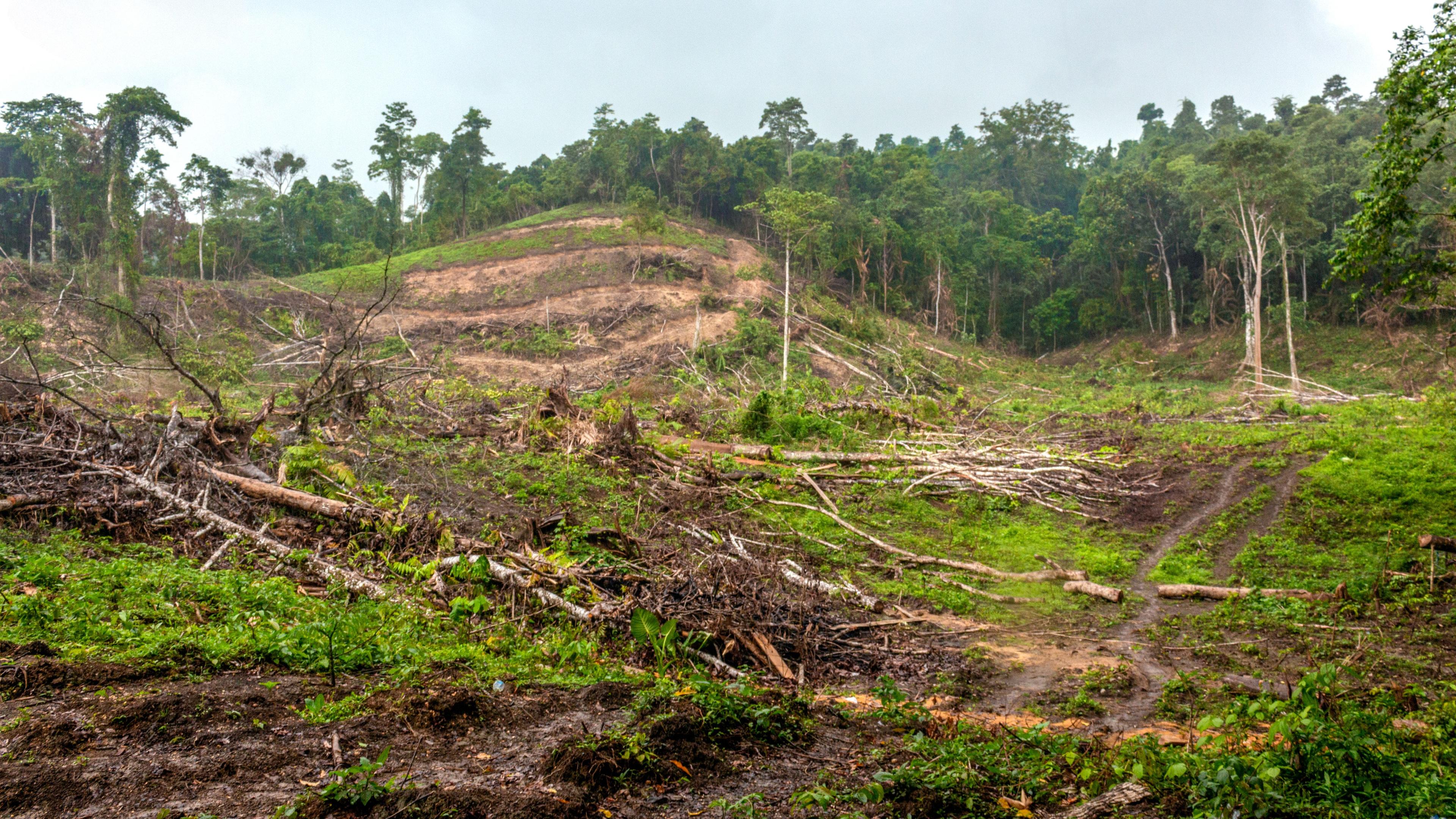
Deforestation in Indonesia in 2023. Photo credit: La Zul / iStock.
However, Indonesia saw a sharp reversal in its previous progress. Emissions from deforestation surged by 37% in 2023 compared to 2022 levels, breaking a downward trend that had been steady since 2015. This increase was further amplified by El Niño-driven fires, with fire emissions in Indonesia quadrupling in 2023 compared to 2022, with particular impacts in lowland forests and peatlands.
Tropical forest degradation increased in 2023. CTrees measure emissions from degradation, which involves severe alterations to forested areas from human activities including logging, road development, and fire. Tropical forest degradation emissions increased by approximately 73%, from 179 million metric tons in 2022 to 310 million metric tons of CO₂e in 2023.
Tropical forests remain a major source of global emissions. Gross emissions from deforestation, degradation, and fire from the top 15 emitters across tropical regions exceeded 8 billion metric tons of CO₂e in 2023, equivalent to more than a quarter of global fossil fuel emissions. The findings emphasize the critical role of reducing deforestation and forest degradation (REDD+) as a climate mitigation strategy.
2. Forest fire drives high emissions in the Northern Hemisphere
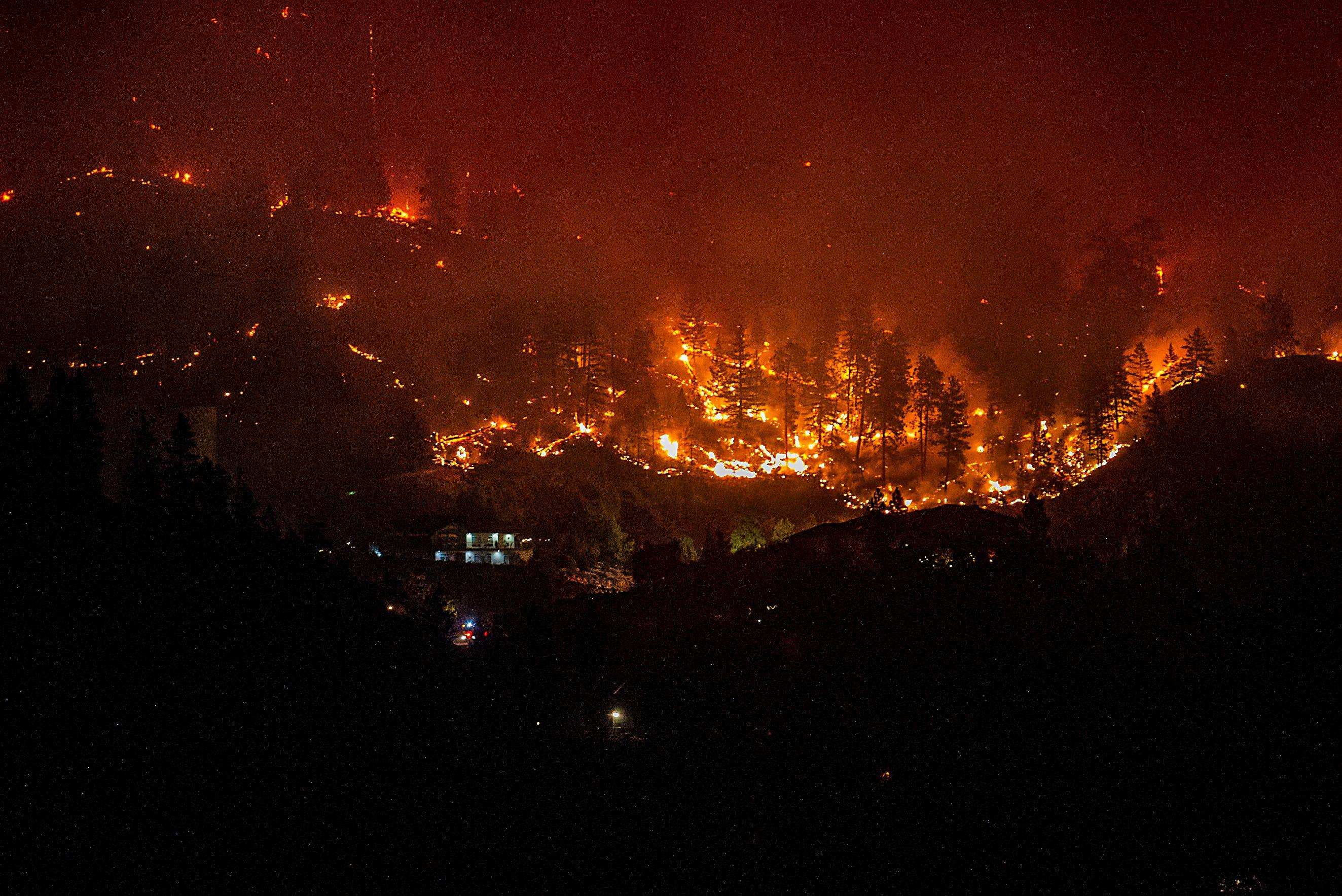
Forest fire in the Okanagan Valley, Canada in 2023. Photo credit: shoothebreeze / iStock
2023 marked yet another period of high emissions from fires and forest loss in the Northern Hemisphere. Since 2013, high temperatures and prolonged droughts have fueled more frequent and intense forest fires across North America. The CTrees data shows no significant emissions reductions in the land sector across the Northern Hemisphere in 2023.
Canada’s record-breaking forest fires in 2023 burned more than 15 million hectares, an area larger than England, and produced approximately 1.2 billion metric tons of CO₂e emissions from loss of live biomass. Including soil carbon loss, Canada’s total emissions could exceed 2.0 billion metric tons of CO₂e, surpassing Russia’s annual fossil fuel emissions. Data from CTrees’ JMRV platform shows that the area of burned forest and forest fire emissions in Canada in 2023 were nearly five times the average of the past 20 years, underscoring the declining resilience of forests to climate change.
Wildfires, logging, and land clearing continued to impact boreal forests across North America and Europe. Scandinavian countries, particularly Sweden, Norway, and Finland, have consistently cleared large areas of forest each year, contributing to rising emissions. While Norway reduced its emissions by 10% in 2023 compared to 2022 levels, the overall emissions trend in Scandinavia has remained on an upward trajectory over the past decade.
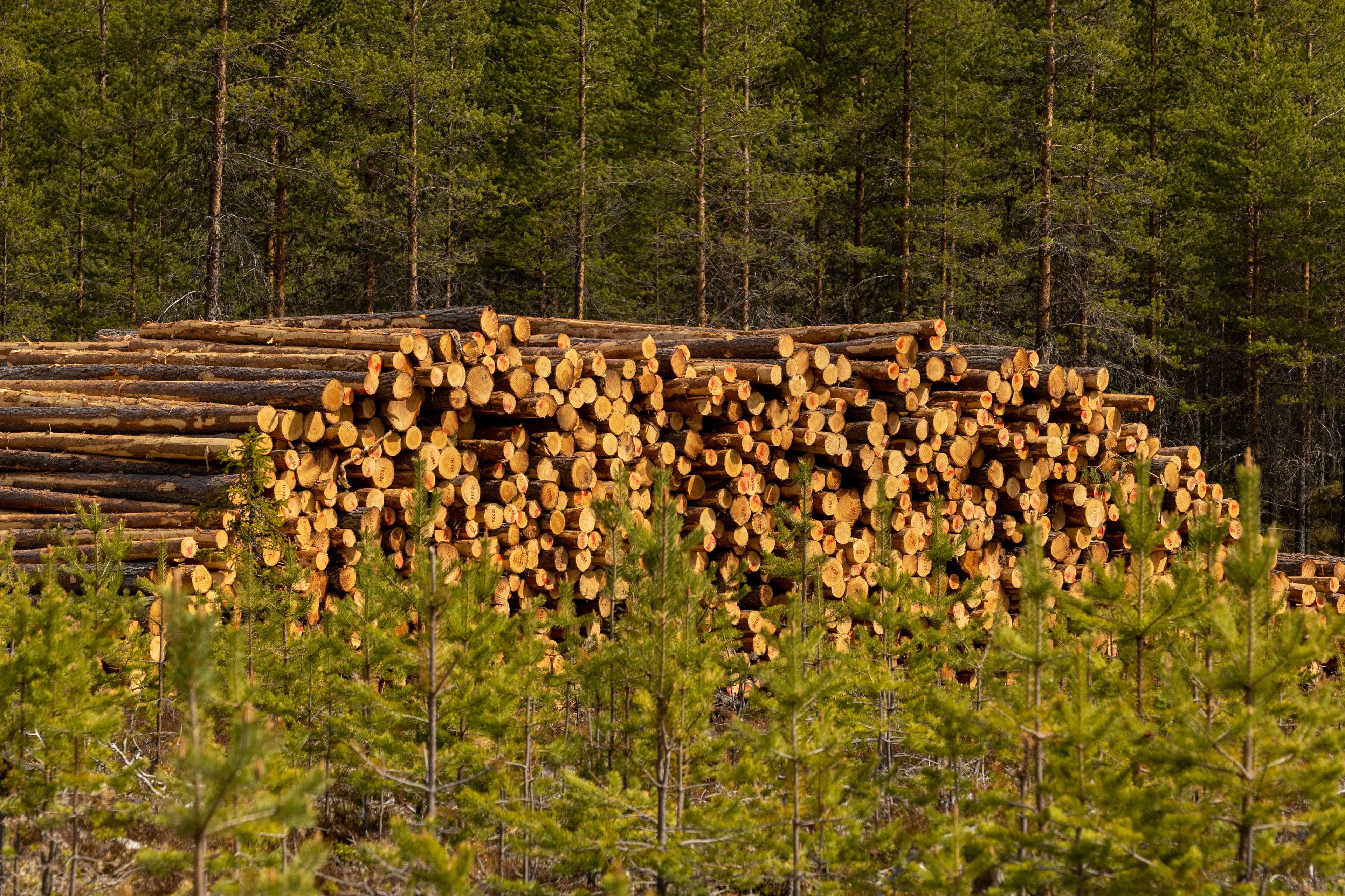
Logging in Sweden in 2023. Photo credit: Alexander Farnsworth / iStock.
3. Declining resilience of the global land sink
The global land sink further weakened in 2023, driven by extensive forest fires and slowed forest recovery due to warming and drying conditions. Land carbon sinks involve natural processes that remove carbon dioxide from the atmosphere. CTrees’ estimates focused on the role of live biomass in carbon removal. The largest reductions in land carbon sink capacity were observed in northern temperate and boreal regions, where wildfires in North America were the primary cause of biomass carbon loss.
The trend sends an urgent message to policymakers: The resilience of natural carbon sinks cannot be taken for granted.
Urgency for action
With COP29 taking place in Azerbaijan this week, JMRV provides timely data for countries to measure and report progress towards their nationally determined contributions (NDCs), which countries will update before next year’s UN climate conference in Brazil.
JMRV is an independent data source that countries can use to report their carbon stocks, emissions, and removals from land. The AI-powered platform combines data from several sources – including satellite imagery, air and space-based lidar, and forest inventory data.
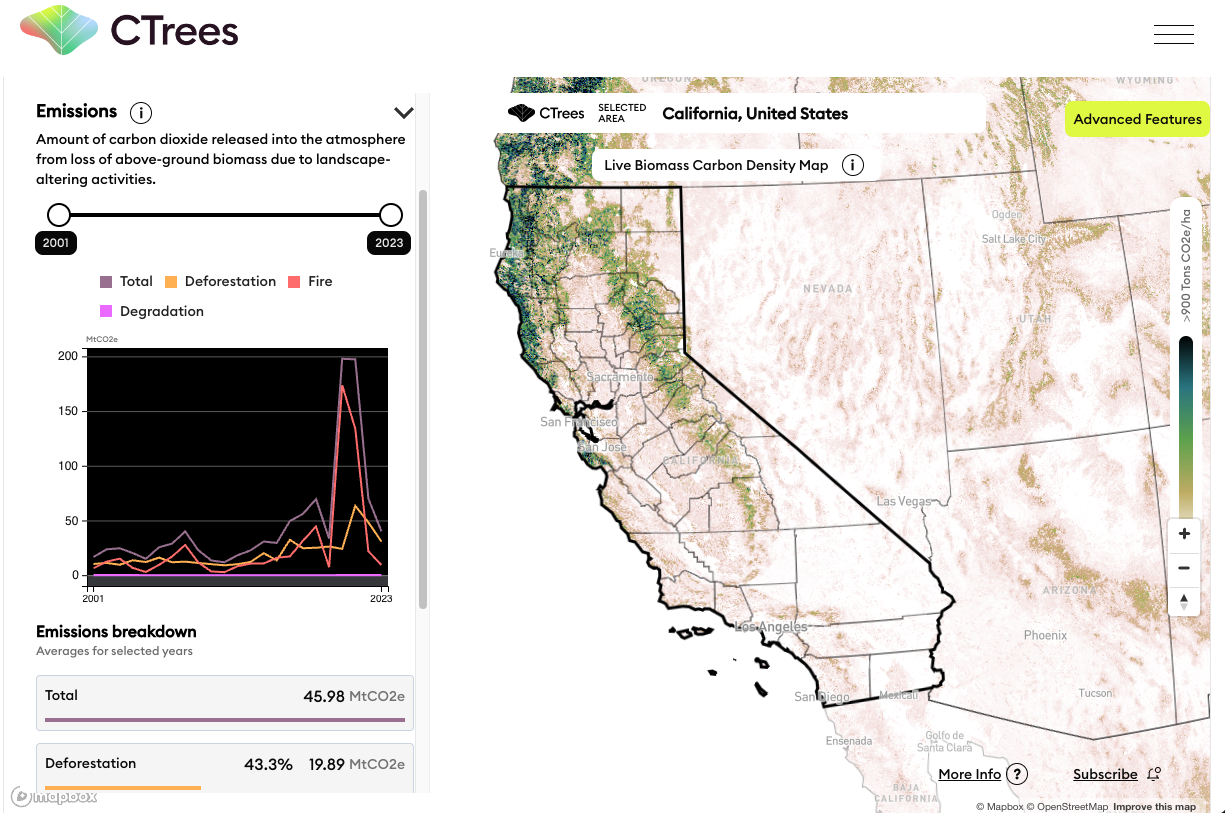
CTrees’ Jurisdictional MRV platform provides open data on forest area, carbon stocks, emissions, and removals for all countries globally.
The 2023 update allows for assessment at country, state, and, for the first time, county or district levels. The JMRV tool has also been updated with a 2023 biomass map to visualize where carbon stocks are located within jurisdictions.
JMRV is one of several open data tools offered by CTrees. Land Use Change Alerts (LUCA) provides biweekly alerts on deforestation and degradation in forests worldwide. And REDD+AI quantifies different drivers of forest degradation on a global scale.


