Four CTrees scientists travelled to Salvador, Brazil, in April to present research at theXXI Brazilian Remote Sensing Symposium (SBSR).
SBSR brings together more than 1,000 attendees representing science, technology, and business to discuss the latest research and advancements in remote sensing and geoinformatics. The conference is one of the most prominent events for remote sensing scientists in South America, with many presentations reflecting the importance of the nearby Amazon forest and Brazil’s leadership in forest monitoring efforts.
In a plenary session, CTrees' CEO and chief scientist Sassan Saatchi shared insights on two major new satellites designed to observe land dynamics: ESA's Biomass, which launched in late April, and NASA-ISRO Synthetic Aperture Radar (NISAR), which is expected to launch in June.
In his role as a senior scientist at NASA Jet Propulsion Laboratory (JPL), Saatchi worked extensively on both missions.
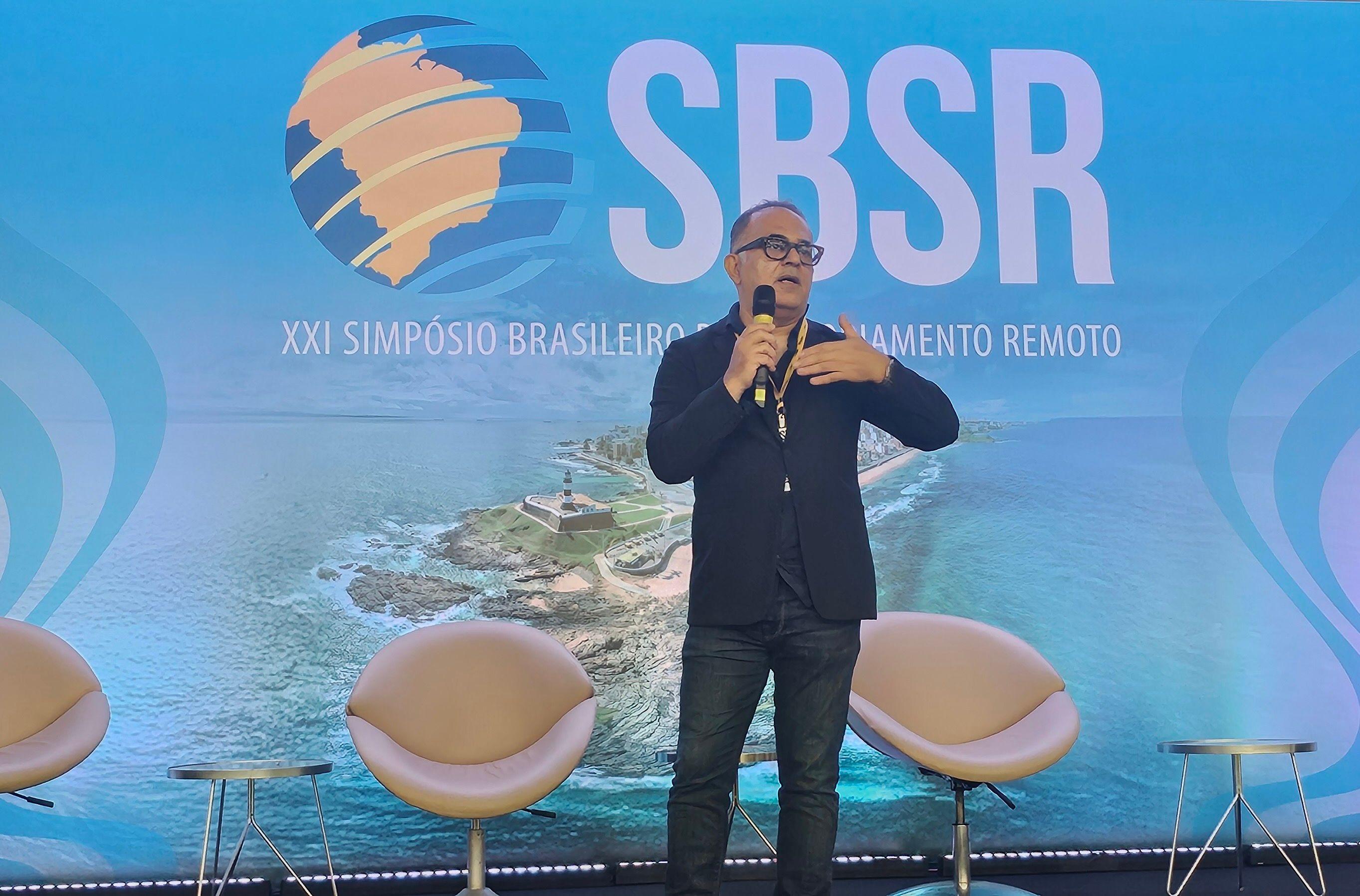
Sassan Saatchi discusses the next generation of remote sensing for Earth observation.
CTrees scientists Ricardo Dalagnol, Mayumi Hirye, and Fabien Wagner leda session on applications of Planet NICFI data for mapping land cover and changes across tropical regions. The presentation demonstrated the powerful combination of high-spatial and temporal resolution satellite data with AI to enable near-real-time deforestation and forest degradation monitoring, canopy height mapping, and urban land cover classification.
Hirye also co-led a session featuring six scientists who presented on topics ranging from mapping tree species to analyzing the transformation of urban and periurban areas in Brazil. Hirye focused her portion of the discussion on her work mapping urban canopy heights in U.S. cities.
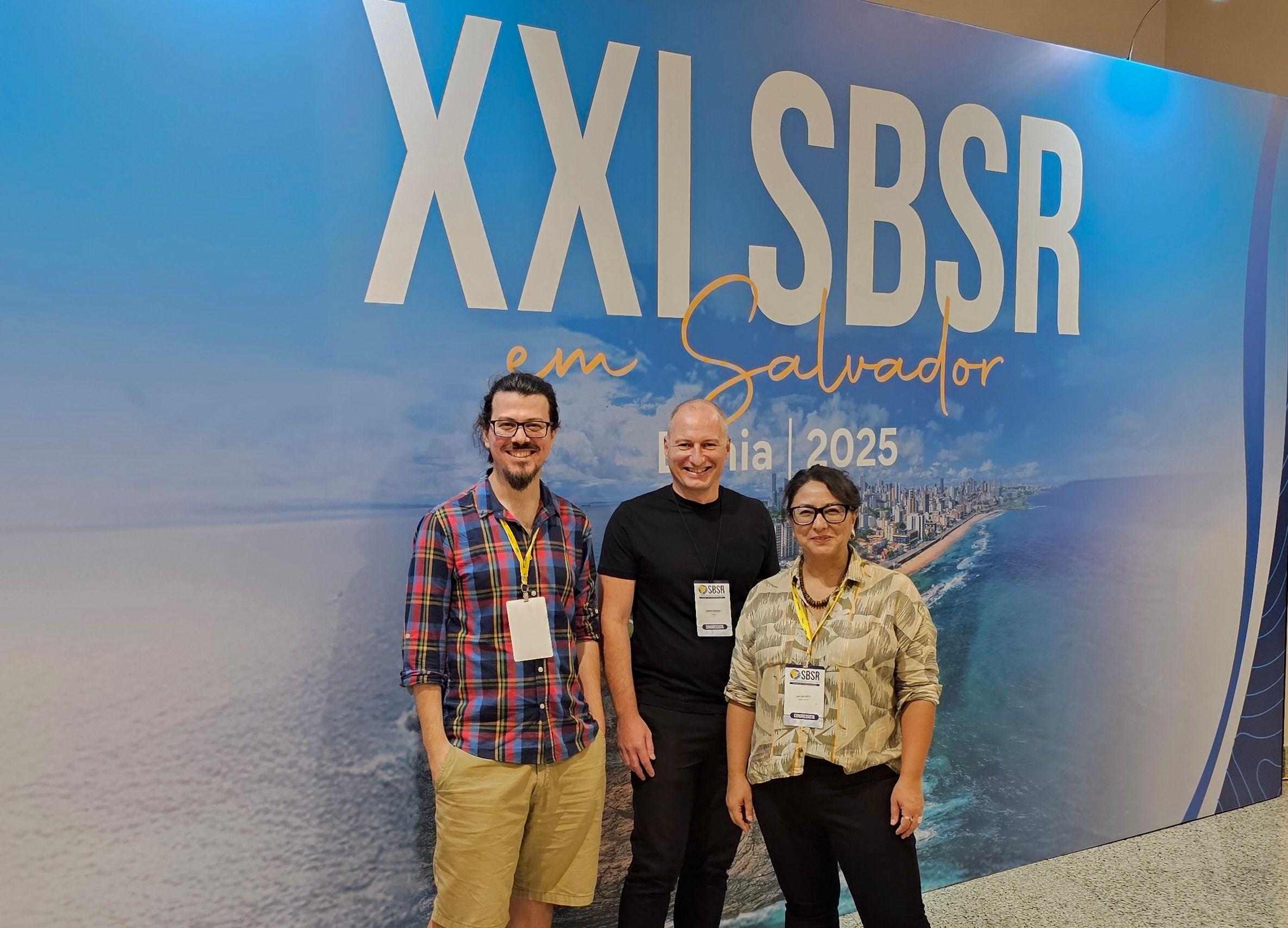
(Left to right) CTrees scientists Ricardo Dalagnol, Fabien Wagner, and Mayumi Hirye all travelled to Brazil to present at XXI SBSR.
In addition to organizing sessions, CTrees partnered with ratings agency BeZero Carbon to sponsor the participation of 11 graduate students from Brazil’s National Institute for Space Research (INPE) at the conference.
The students presented research on forest disturbances from fire, selective logging, drought, biomass estimates in the Amazon region, and other topics. Their participation was supported by INPE scientists and CTrees advisors Luiz Aragão and Liana Anderson.
Throughout the conference, CTrees scientists connected directly with many students and researchers—not only to assess future opportunities for collaboration, but also to find datasets to validate CTrees data products and inspire new ideas for future research.
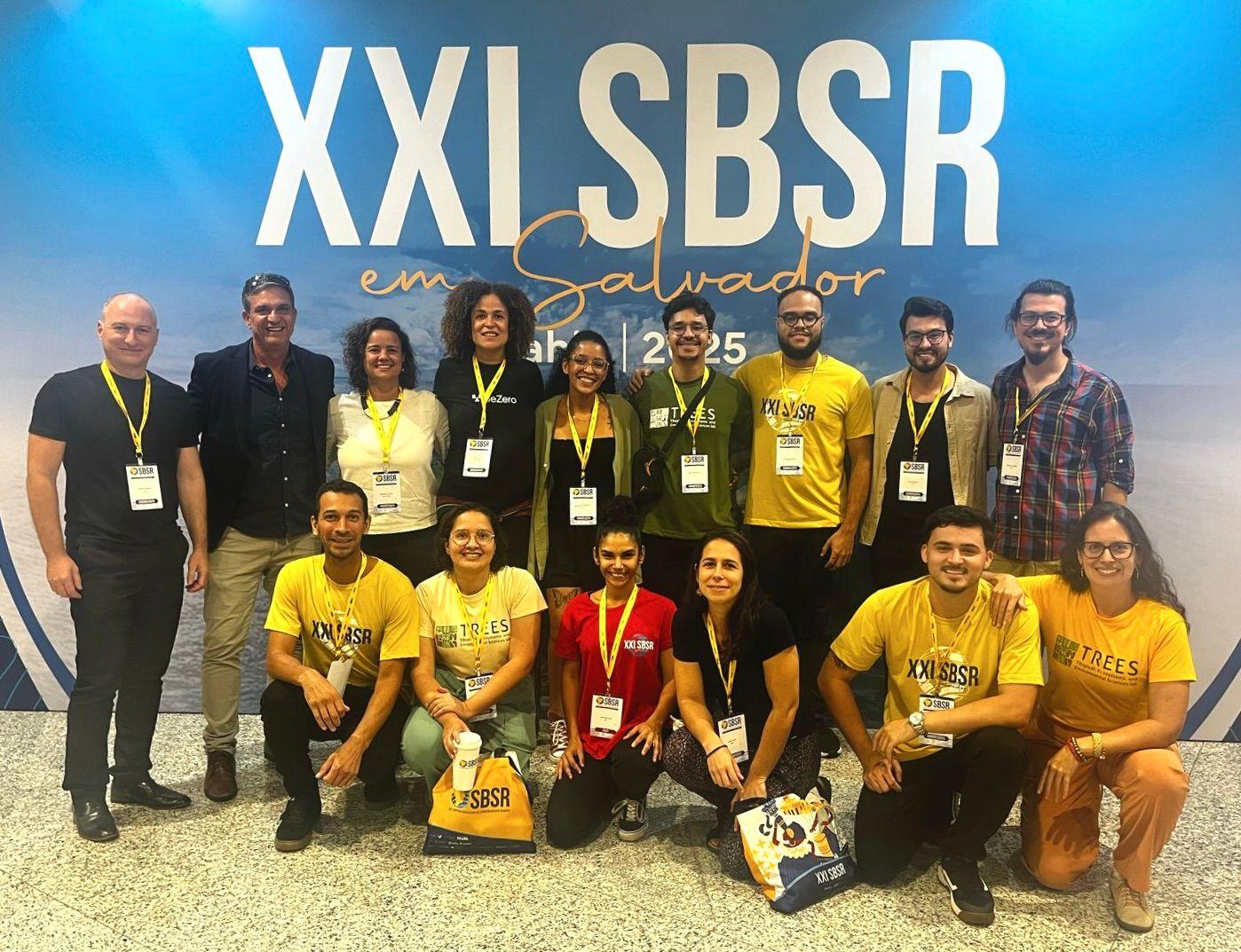
CTrees scientists and representatives from BeZero Carbon pictured with the sponsored graduate students and advisors.
For CTrees scientist Ricardo Dalagnol, this year’s conference was a moment to reflect on the arc of his career in science.
Dalagnol first attended SBSR as an undergraduate student back in 2011. His participation in the conference inspired his decision to pursue a graduate degree and career in remote sensing.
“My first time at SBSR was quite formative,” said Dalagnol. “I was deeply impacted by that experience, and I hope that my involvement in this year’s conference helps inspire the next generation of scientists.”
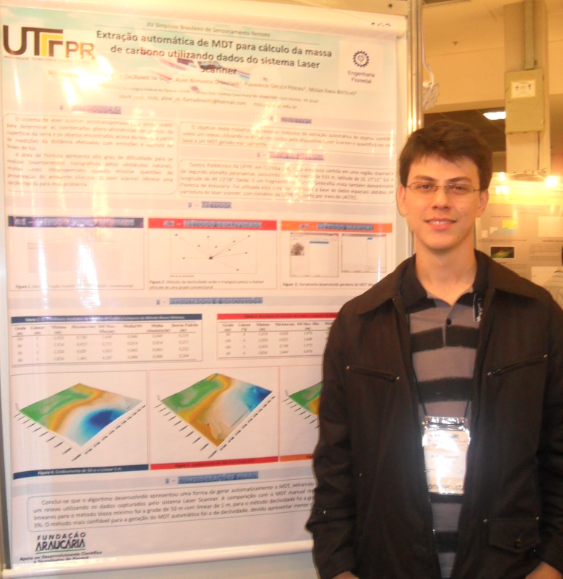
Dalagnol presented on high-resolution satellite image fusion at SBSR in 2011.
CTrees’ involvement in SBSR reflects a larger commitment to advancing science innovation and scaling natural climate solutions globally. International collaboration and knowledge sharing at conferences like SBSR and AGU are critical to scientific progress.
“SBSR is a unique opportunity for our community of scientists to come together, share ideas, and shape future advancements in the field,” said Dalagnol. “I feel very proud that CTrees could be a part of that.”


