
The U.S. forest inventory is falling behind.
Created in 1928, the USDA Forest Service’s Forest Inventory and Analysis (FIA) program has long been the gold standard for forest monitoring science, serving as the primary source of information on the status of forests across all ownership classes, and providing standards and methodologies that set the benchmark for how other countries organize their own inventories.
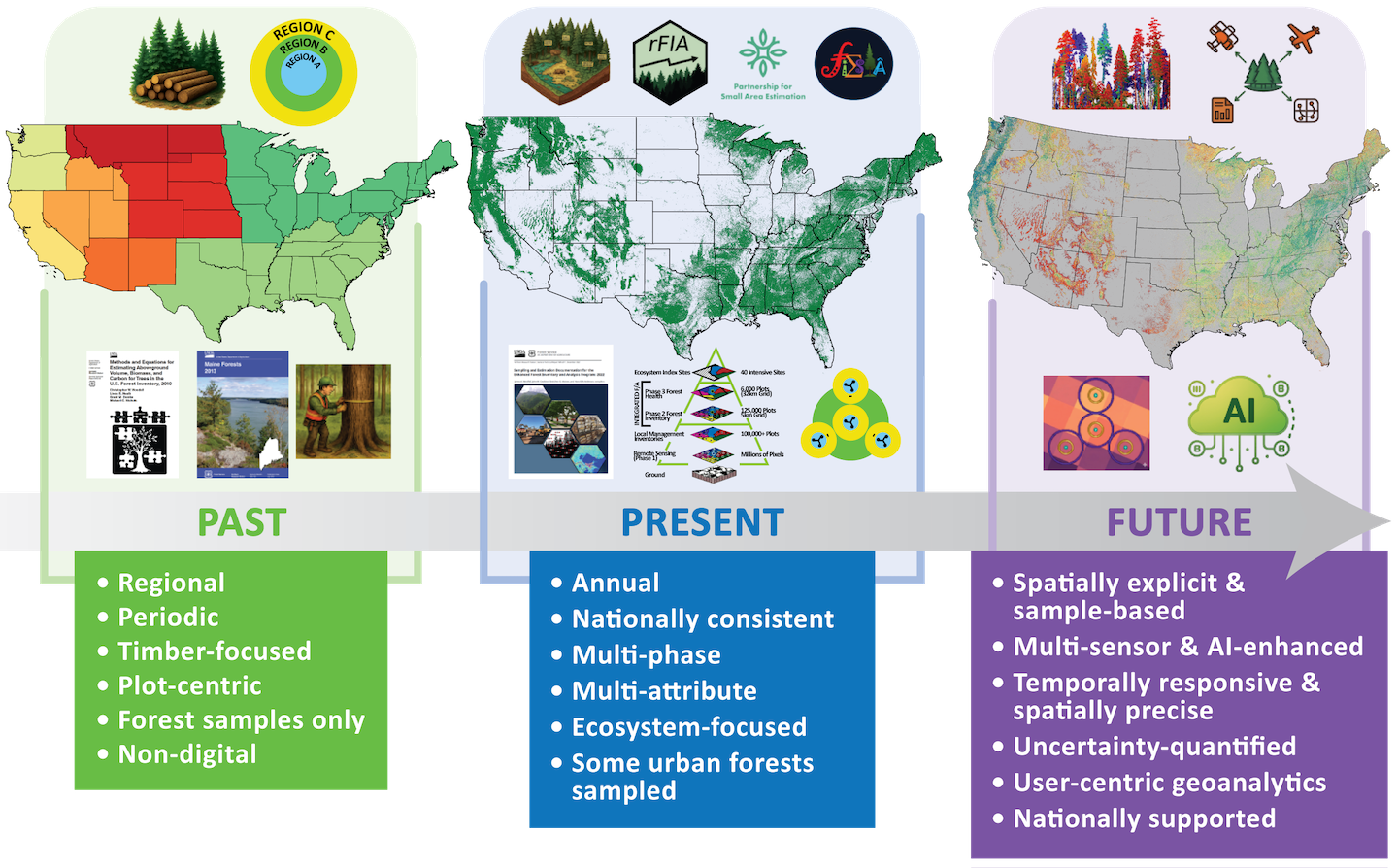
But the FIA program is increasingly disconnected from technologies like satellite and LiDAR remote sensing and AI. Despite its recent successes in producing annual inventory results, forest health monitoring, and urban analysis, the program is suffering capacity constraints, even as user demand is increasing. Consequently, the $427 billion U.S. forest sector lacks the digital forest intelligence needed to address challenges like fire, pests, and drought, and proactively manage forests for the sustainable supply chains of the future.
In a recent commentary (opens in a new tab) in the Journal of Forestry (Weiskittel et al. 2026), I joined forest sector leaders in calling on Congress to urgently renew the country’s leadership in forest monitoring technologies. The intervention is straightforward: Authorize a third Blue Ribbon Panel to chart how the FIA program integrates modern technology.
The panel would convene a dozen leading experts for a yearlong process resulting in a credible roadmap for an inventory that integrates ground measurement, remotely sensed data, and small-area estimation to meet the analytic needs of the sector.
One field, many sectors, one loud voice
The article authors come from industry, state agencies, federal programs, conservation organizations, universities, and private-sector forest analytics. These stakeholders may sometimes disagree, but in the case of FIA, they converged on one recommendation.
When timber companies, government scientists, conservation groups, and technologists all ask for the same thing, it is a field speaking with one voice about national infrastructure that every American depends on, and which can be emulated globally. Decision-makers should hear it as such.
Building technology to compete in a global marketplace
Our call for FIA modernization comes as dozens of countries are improving their forest measurement with timely, spatially explicit, and verifiable information.
The European Union is building satellite-verified transparency into its deforestation regulation, which takes effect next year. China has launched dedicated forest-carbon satellites. Finland now runs a fully integrated national inventory pairing wall-to-wall LiDAR with field plots.
The U.S. is a leader in forest technology. Its innovations include groundbreaking satellite missions like NASA’s GEDI and IceSAT, precise state-level LiDAR scans, and machine-learning approaches that process petabytes of data to estimate forest carbon, canopy height, and forest activity, developed by groups like CTrees.
But U.S. innovation is disconnected from FIA ground data. The FIA program lacks a framework to integrate external datasets and remote sensing technology with its ground plot data to produce the fine-scale forest estimates that industry demands. Led by experts from a range of sectors, the Blue Ribbon Panel would set a vision for a unified, national FIA.
A modernized FIA can have an impact beyond U.S. borders. Part of the Blue Ribbon Panel’s remit would be to set open, interoperable standards for small-area estimation and sensor fusion, the process of integrating ground, air, and satellite datasets to create trustworthy forest and carbon estimates. The panel would also consider frameworks for governance and confidentiality, critical issues as remote sensing products offer unprecedented, fine-scale data on public and private lands.
Why ground data matters
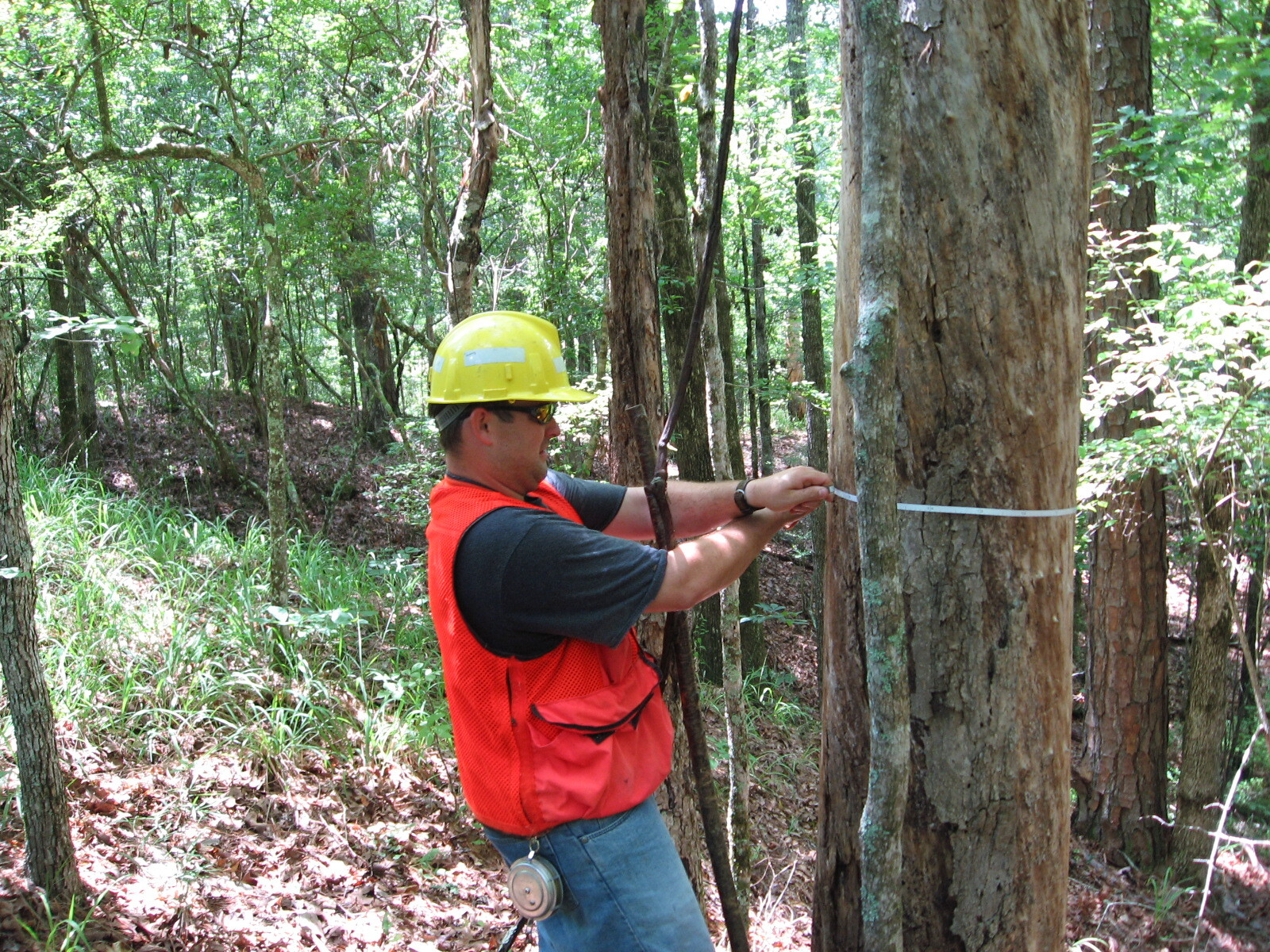
The U.S. starts from genuine strength. In operation for nearly a century, FIA monitors more than 300,000 ground plots, tracking timber, carbon, wildfire fuel, and forest health across every ownership class and forest condition.
The FIA program is a gold standard that other nations seek to emulate. I spent 24 years at the Forest Service helping turn FIA field measurements into the nation’s official forest resource accounts. I can say plainly that no other country has a ground network this deep, this institutionalized, or this trusted.
FIA data matters both for U.S. forest data and international estimates: Ground truth is what makes every satellite estimate and AI model credible. The value of FIA data multiplies when it anchors shared international systems, not when it is walled off. American firms, including CTrees, are already building world-class AI, satellite, and forest-mapping tools. What is missing is a national framework that connects that innovation to FIA’s ground truth in a way the wider world can build on.
Creating data infrastructure, not an experiment
Modernization should reassure decision-makers, not unsettle them, so let me be precise about what technology integration means for FIA.
This is not autonomous AI replacing foresters or field crews. It is operational infrastructure: LiDAR, satellite imagery, machine learning, and small-area estimation that convert massive data volumes into decision-ready information, with expert humans in the loop and FIA’s permanent plots as ground truth. The field network stays, and stays central; and wall-to-wall maps are built from ground samples, not in place of them.
A modernized FIA program would deliver the digital forest intelligence the sector needs to combat wildfire, manage carbon, and plan sustainable forest management. Framed this way, modernization is not a gamble with a trusted public asset; it is the foundation of every credible forest-climate action, from carbon markets to sustainable supply chains. A panel’s job is to set the standards that keep it rigorous and transparent.
The opportunity
The Blue Ribbon Panel is a proven instrument. Independent panels in 1991-1992 and 1997-1998 delivered the annual inventory cycle, forest health monitoring, standardized methods, and open data access. These are the features that make FIA the world’s model today, and a third would finish that work for the digital era.
Now is the moment for Congress to authorize USDA and the Forest Service to convene the nation’s top independent experts.
The real choice is what kind of leadership the United States exercises: modernize our forest inventory and lead the global community by example, contributing the ground truth and open standards that make climate-positive markets work, or let a foundational asset age while the rest of the world builds around it. Influence lasts longest when it sets an example worth following.
It is time for the third panel.


