
For decades, ecosystem scientists have applied randomized control trials to measure the impact of new modes of forest management. By comparing control and treatment plots, the established scientific approach allows for rigorous, quantified results.
Now scientists are looking to apply control trials in forest carbon projects, bringing a new way to measure how forest management approaches can increase carbon removals.
Last week, Verra, a leading carbon market standard, opened a public consultation on a draft methodology for randomized control trials for forest carbon sequestration. The draft methodology is now available for public comment through June 8, 2026.
Since last year, CTrees scientists have worked with experts from Funga, Conservation International, and The Nature Conservancy to co-develop the methodology.
CTrees and our partners encourage interested parties to review the proposed methodology and submit questions and reflections during the public comment period. Feedback from the community will strengthen the methodology and benefit the community as a whole.
A scientific approach to measure forest carbon sequestration
The new methodology uses randomized control trials common in the medical field to bring an increased level of detail and rigor to carbon accounting of improved forest management (IFM) projects, which aim to enhance carbon sequestration in existing forests.
In this approach, randomly selected and established control plots (without IFM treatment) are paired with treatment plots (with IFM treatment) and then measured at regular intervals across the life of the project. The plot pairs are established and set aside within the project area.
The control plots act as a dynamic baseline, capturing business-as-usual forest growth over time, against which growth in the treatment plots is evaluated.
Opening a new finance channel for global forests
The implementation of the control-trial-based methodology is intended to accomplish two goals: broad applicability and increased rigor.
The new methodology brings the historically trusted randomized control approach to carbon accounting, and can be applied to IFM projects across the globe, including in areas without extensive national forest inventories.
When the draft methodology is finalized, a broader range of IFM projects can use this approach to rigorously track the additional carbon captured due to project implementation. The randomized control methodology opens the door to innovative techniques to improve carbon sequestration in managed forests, like soil amendments and mixed species planting.
Exploring liana thinning for carbon removal in tropical forests
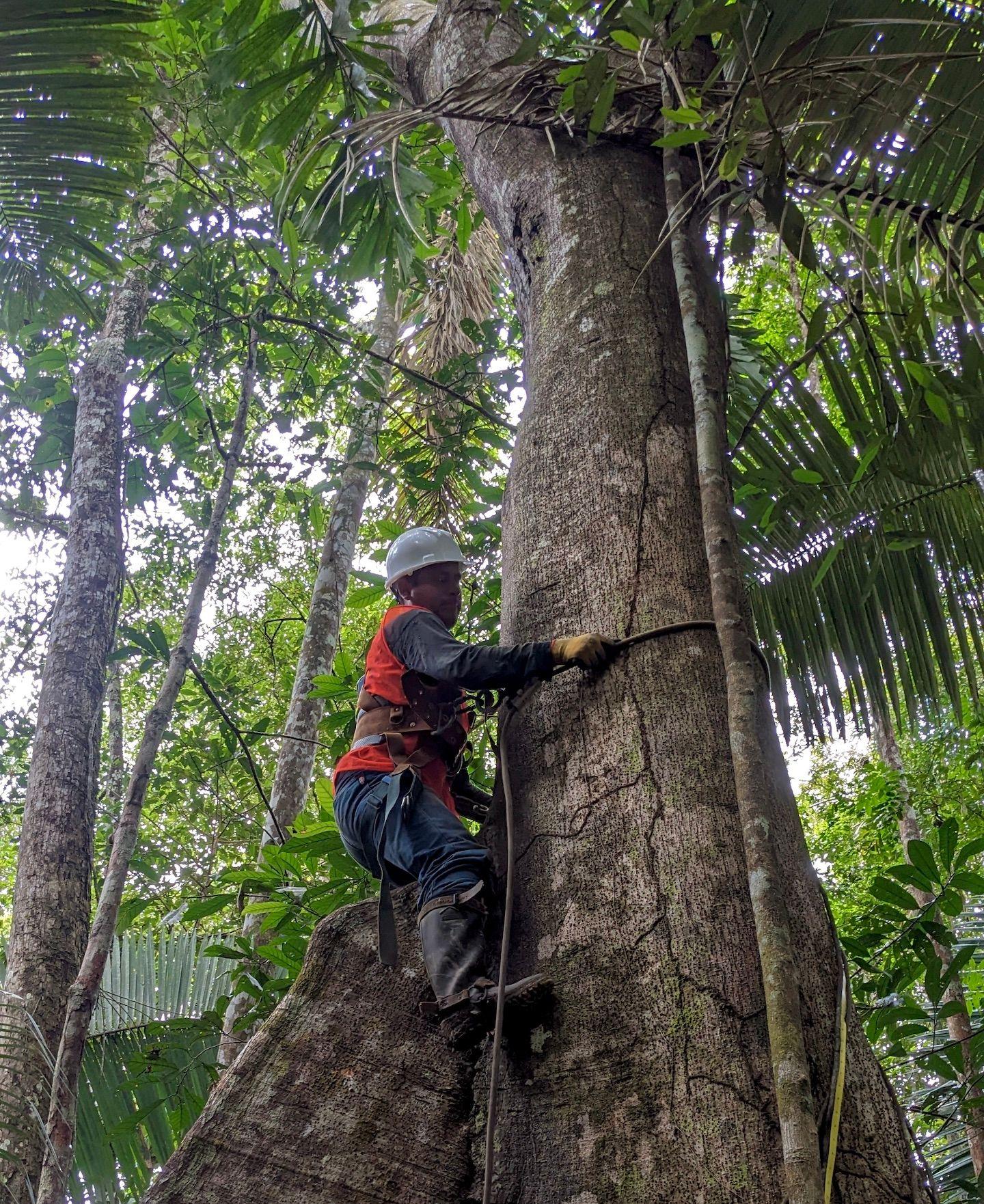
Once approved, CTrees intends to implement the new methodology in partnership with Conservation International to track carbon removals in tropical production forests treated with liana thinning.
In some logged tropical forests, lianas, or woody vines, can become superabundant, extending far beyond their pre-logging levels. When lianas out-compete trees, they can dramatically slow the growth of the trees. By thinning the lianas in production forests, forest managers can substantially accelerate tree growth and carbon removals.
Randomized control trials that pair treated (liana-thinned) and control (no liana thinning) areas in tropical production forests, would allow CTrees and CI to accurately account for the increased carbon removals due to this improved forest management technique.
Our commitment to innovation in carbon markets
CTrees continues to support nature-based climate solutions by developing methodologies and providing data products and analytics.
Scientific approaches and high-quality data can facilitate better decision making and management of the world’s trees–inside and outside of forests.


