
By Daniel Melling
At a COP focused on fossil fuels, we can't take nature for granted. While trees and forests globally help sequester carbon, deforestation is often overlooked as a significant and growing source of emissions.
CTrees data shows that last year deforestation across the tropics increased by about 5 percent and globally deforestation added more than 4.5 gigatons of carbon dioxide emissions to the atmosphere. Forests also face pressure from global heat extremes, which cause droughts and contribute to wildfires that increase emissions and diminish removals from forests.
The global community has heralded nature as a solution to climate change but the sector only receives around 3 percent of climate finance, according to the Climate Policy Initiative. And public funds to reduce deforestation amount to just $2.2 billion per year, less than 1 percent of the necessary funding, per the Forest Declaration Assessment. This lack of finance has prompted calls from Brazil and tropical forest states in the Governors' Climate & Forests Task Force at COP28 for a step change in funding for forest protection.
The good news is that innovations in policy and finance are bringing new, effective approaches to curb deforestation, that combine ambitious targets with accountability for the industries that drive land use change, and incentives to jurisdictions and projects that protect forests:
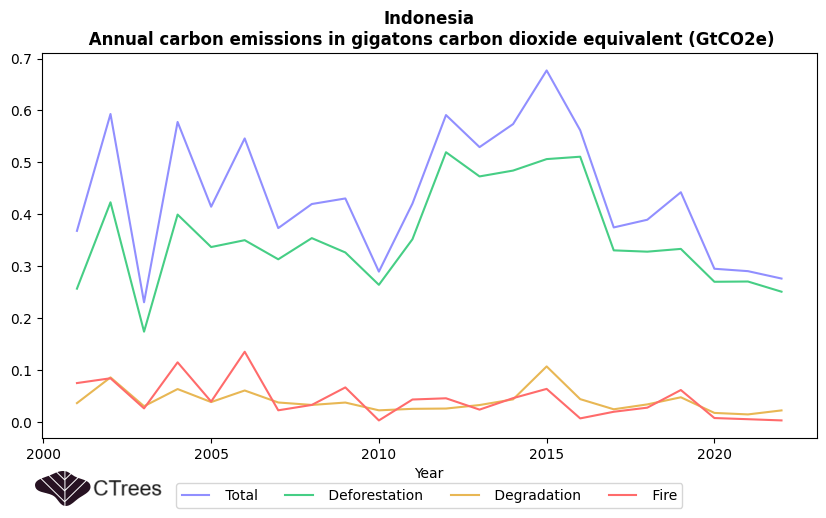
- Indonesia’s emissions from deforestation and degradation continued to drop in 2022 by about 56% and 87%, respectively, following the National Low Carbon Development and One Map policies implemented starting in 2016, according to data in CTrees' Jurisdictional MRV platform.
- In Latin America, emissions did not change significantly throughout 2022 but started to decline in 2023, mostly due to Brazil’s new regulations. In Brazil, CTrees’ Land Use Change Alerts (LUCA) platform shows more than a 45% reduction in deforestation in Brazil as a result of the new government policies.
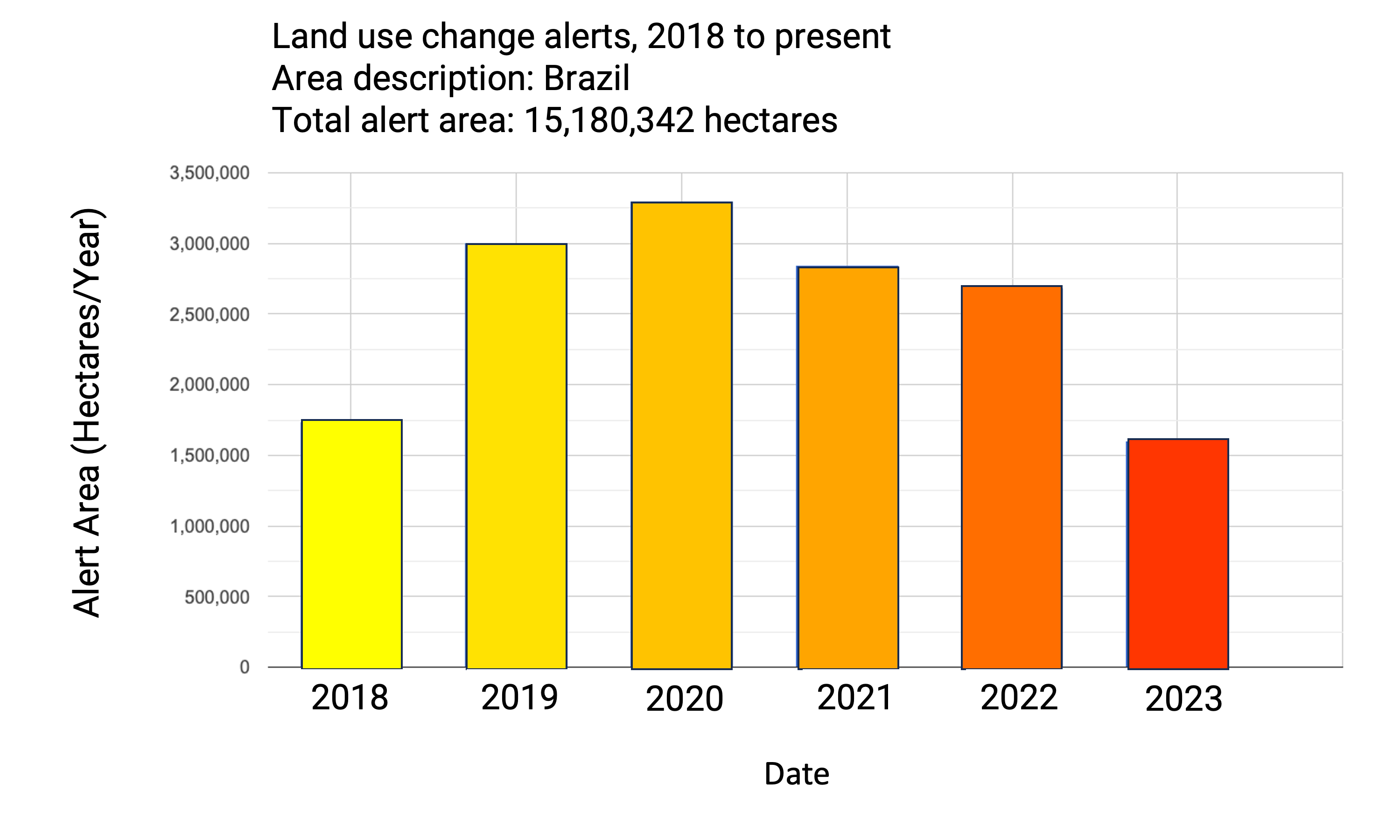
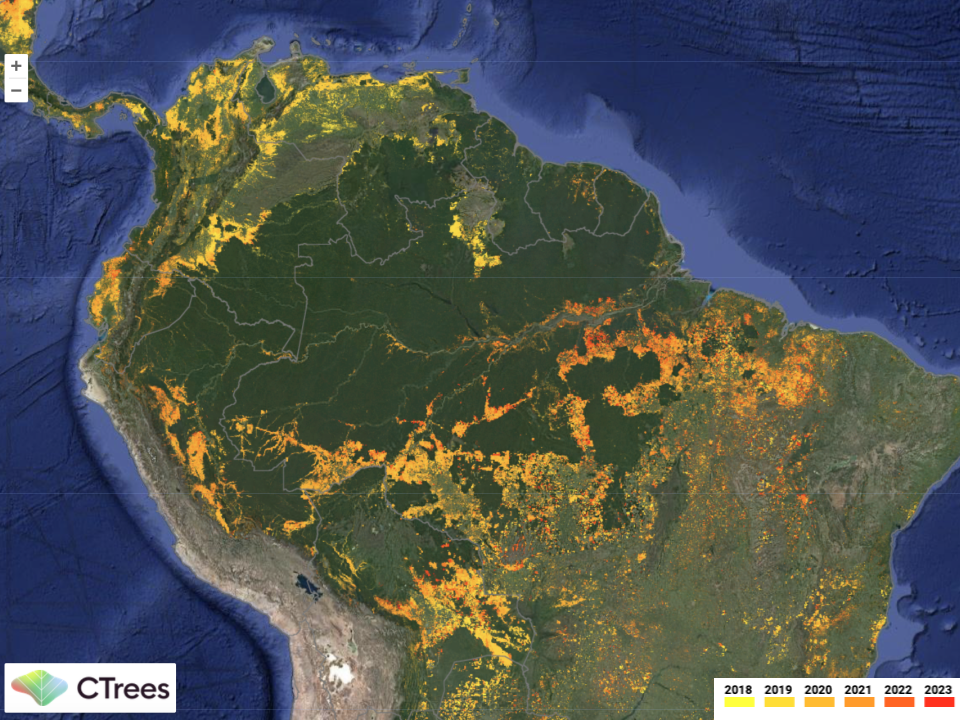
Land use change alerts in the Brazilian Amazon, 2018 to present, on the CTrees LUCA platform.
- COP28 has also seen significant progress in carbon markets, with carbon standard Verra introducing a new consolidated REDD methodology for projects that reduce deforestation, backed by CTrees data; and Costa Rica and Ghana signing purchase agreements with corporate buyers for credits under the ART/TREES methodology. Broadly, the voluntary carbon market is coalescing around standards to ensure a high-integrity carbon market.
- The EU Deforestation Regulation has sparked a race this year to improve monitoring and reporting of deforestation in commodity supply chains. And similar bipartisan U.S. legislation has been introduced this month that would restrict imports of products linked to deforested lands.
At the heart of these initiatives to protect forests is transparent, independent data that allows countries to verify the carbon value of their forests, track land use change as soon as it happens, and better target policies, investments, and enforcement. To date, only wealthy countries have had access to sophisticated MRV systems, hampering effective governance in the tropical forest countries where deforestation is rising the fastest.
Backed by philanthropy and world-leading scientists, CTrees is now giving all countries access to cutting-edge data resources, like annual reports on carbon stocks, emissions, and removals for both forest and non-forest lands in all countries, and alerts every two weeks on where land use change is happening in any forest globally. Our partnerships with tropical forest countries and jurisdictions go further to build locally led MRV systems that improve forest governance and support access to climate finance.
We look forward to working with all partners who share this vision of independent data, transparency, and accountability to protect and restore forests and ecosystems everywhere.


