
On my last morning in Pucallpa, I woke to the acrid smell of smoke in my hotel room. Haze from forest fires had drifted over the city of more than 300,000 inhabitants in Ucayali, a department of Peru located in the Amazon region. The smoke was visceral evidence of this year’s record fire season in Peru, and across Latin America more broadly, as fires set by farmers to clear land have swept through grasslands, dry forests, and even rainforests.
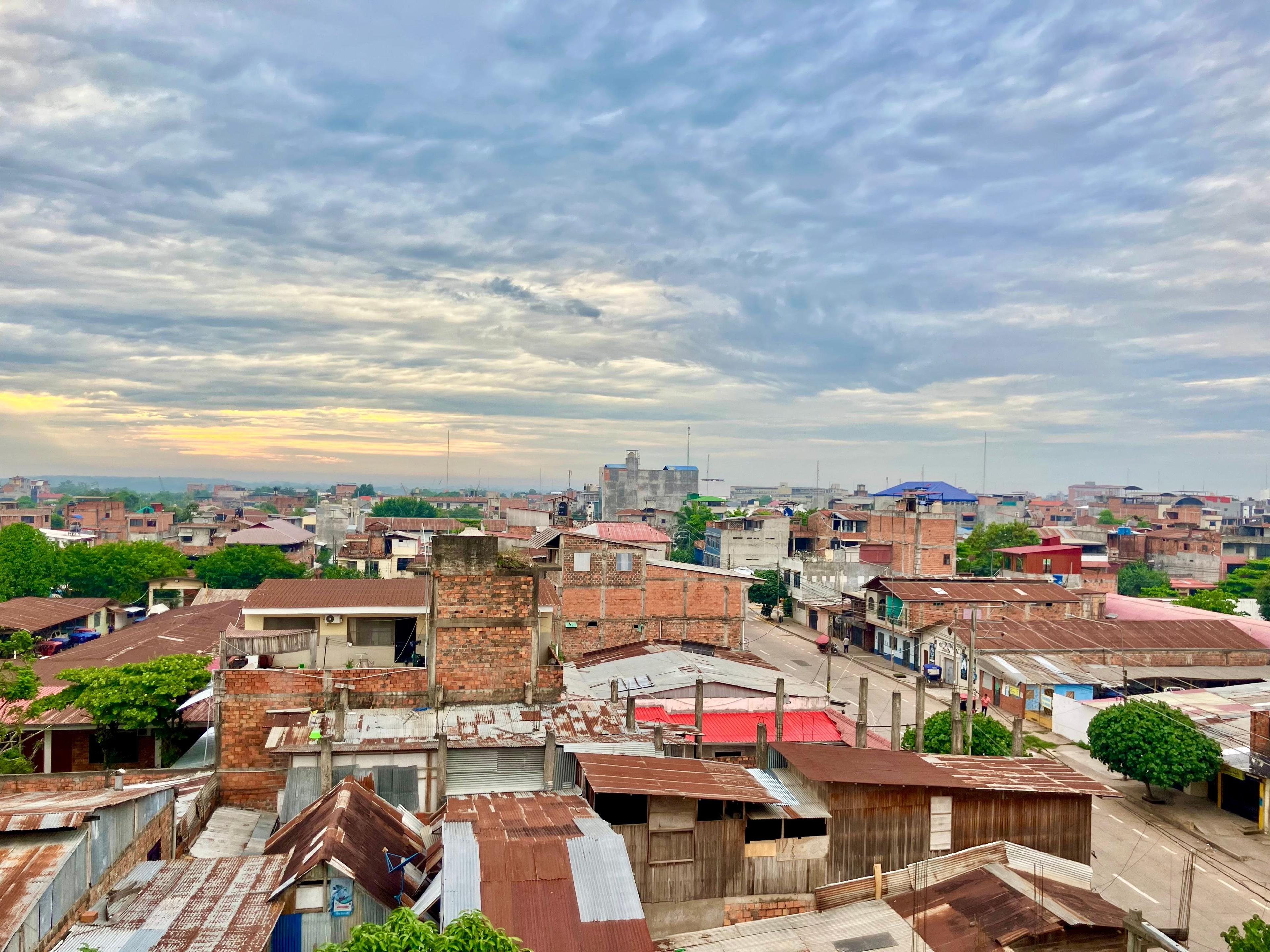
A hazy morning in Pucallpa, a city in Peru’s Amazon region. Photo by Daniel Melling
I was in Pucallpa for the annual meeting of the Governors’ Climate & Forests Task Force, a coalition of states and provinces first convened by Governor Arnold Schwarzenegger in 2009, to support state governments fighting to protect tropical forests as a climate solution.
Today, the coalition’s 43 member states encompass more than one-third of the world’s tropical forests, in countries like Brazil, Indonesia, and Cote d’Ivoire. Backed by a global secretariat based at UCLA, the network helps governors and civil servants exchange approaches, advance their climate and forest policies, and access resources to build durable programs for sustainable land use and rural economic development. Last year, CTrees established a partnership with the task force focused on data exchange and use of advanced remote sensing data by member states.
Managing fire has become a common challenge across the task force’s member states. The week of the annual meeting in Ucayali, several delegates from Bolivia and Brazil stayed at home to manage local fire emergencies. Two weeks prior to my trip to Peru, the Line Fire in California’s San Bernardino mountains ignited during a spell of dry heat, issuing a smoke plume that one local observer told the Los Angeles Times looked “exactly like a nuclear warhead had been set off in the mountains.” Historically, forest fires in Indonesia have caused haze crises across Southeast Asia.
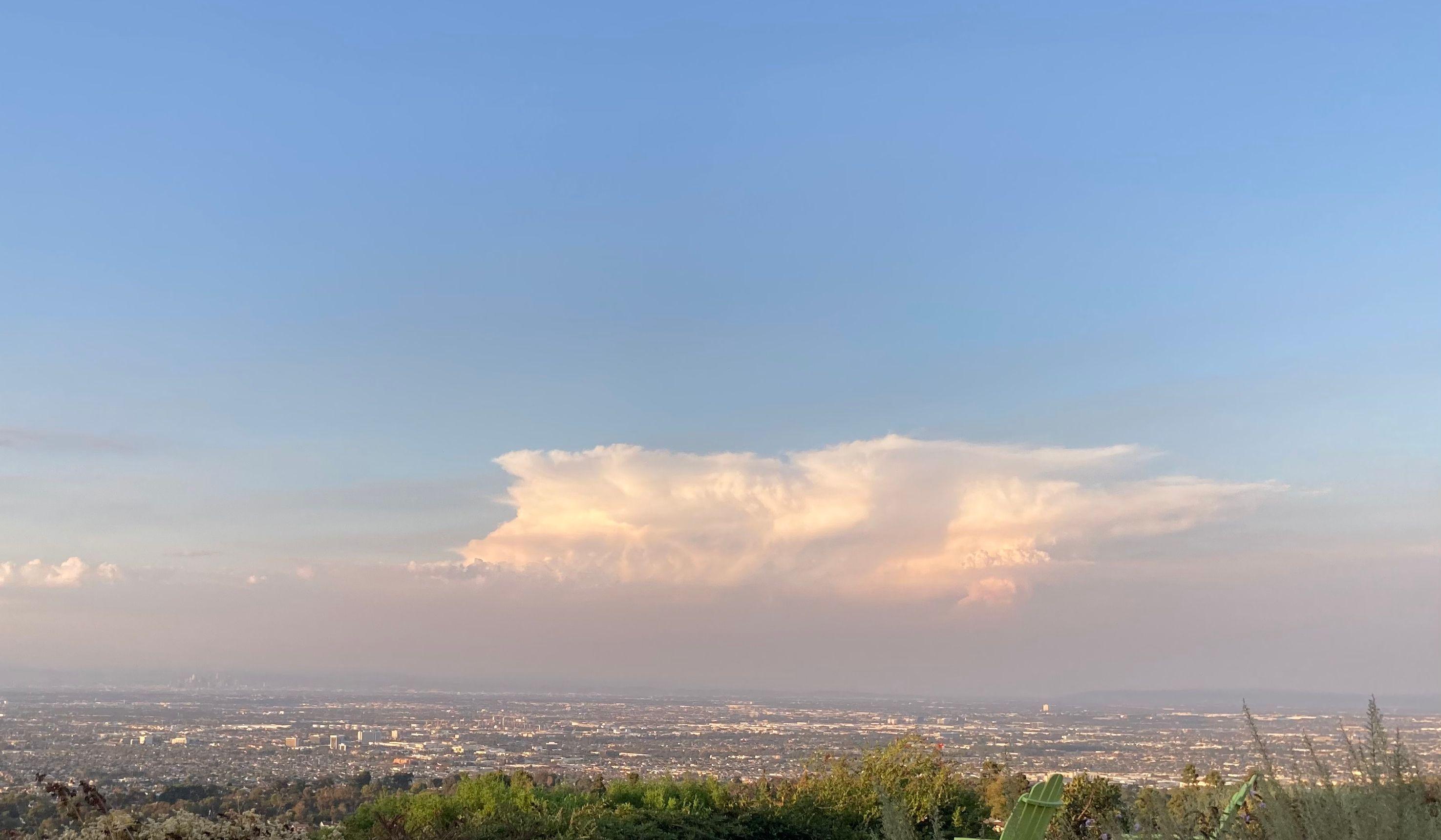
Smoke from the Line Fire in the San Bernardino mountains as viewed from across the Los Angeles basin, September 2024. Photo by Daniel Melling
Addressing fire requires locally specific approaches.
California launched its first natural climate solutions strategy this year, with a focus on reducing emissions from the catastrophic wildfires in forests, shrublands, and grasslands, which have made the land sector a net source of emissions for the state in recent years. Re-introducing indigenous fire practices may help reduce the buildup of flammable understory growth.
In tropical regions, a different emphasis is needed. As fire in tropical forests is typically connected to land conversion for agriculture, policymakers must prioritize enforcement programs while fostering local industries that provide alternatives to clearing forests.
At the conference, Governor Manuel Gambini built an agenda around the concept of a new forest economy, an ambitious program to transform rural economies by developing value-added industries, securing finance to pay for forests’ ecosystem services and restore landscapes, and intensifying agriculture on existing farms and ranchlands.
To demonstrate the new forest economy, the governor’s staff and GCF secretariat developed an agenda to highlight local enterprises that are restoring forests, attracting carbon market finance, and producing sustainable palm oil, tropical fruits, and cocoa. The conference included a full day of field trips to make these industries visible to participants.
In a tour focused on legal timber, my group first stopped on the banks of the wide Ucayali River, where barges stacked with logs from managed forests are brought to shore for inspection and sorting.
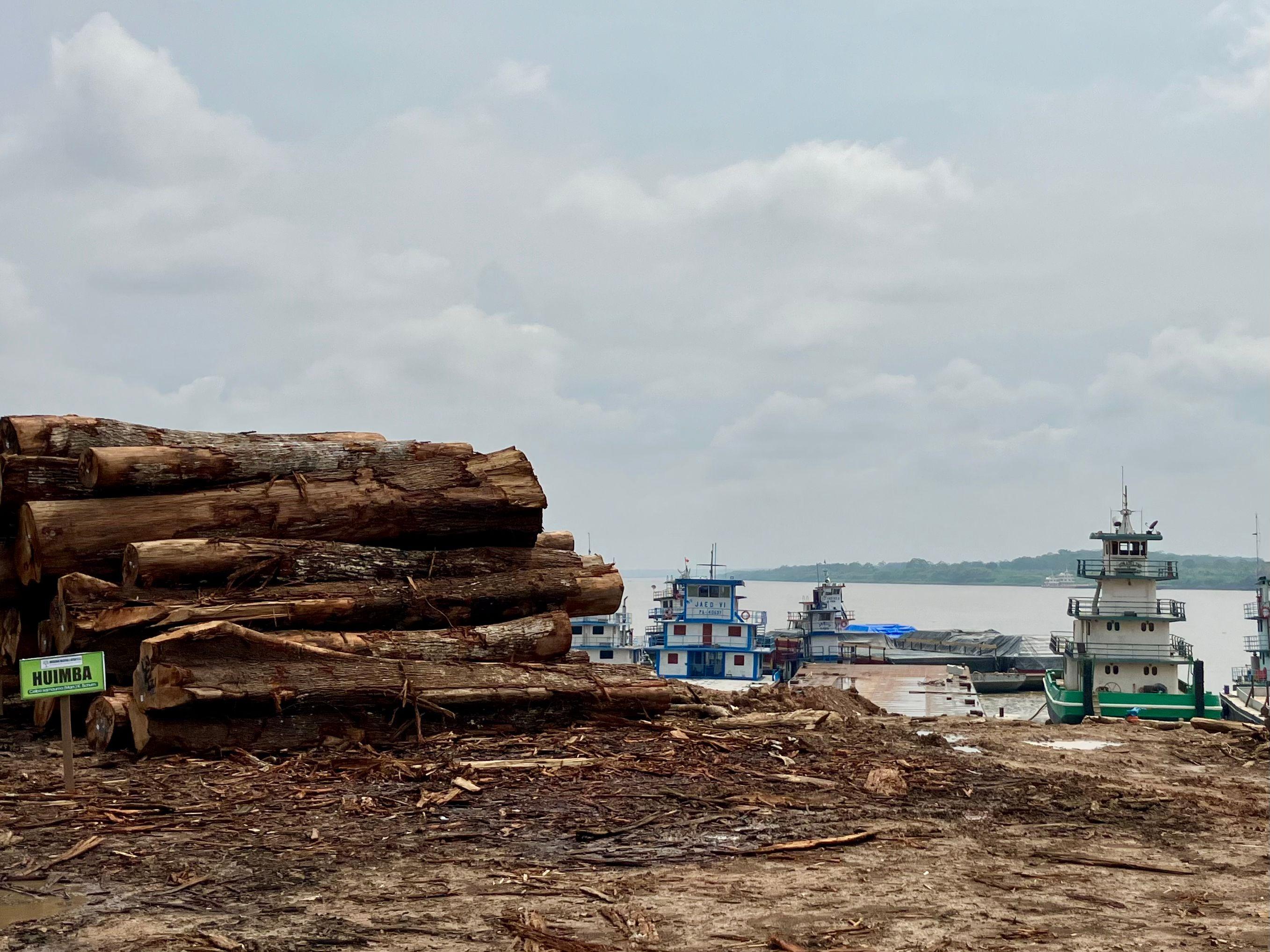
Logs from managed forests are offloaded and sorted at a lumber yard on the banks of the Ucayali river. Photo by Daniel Melling
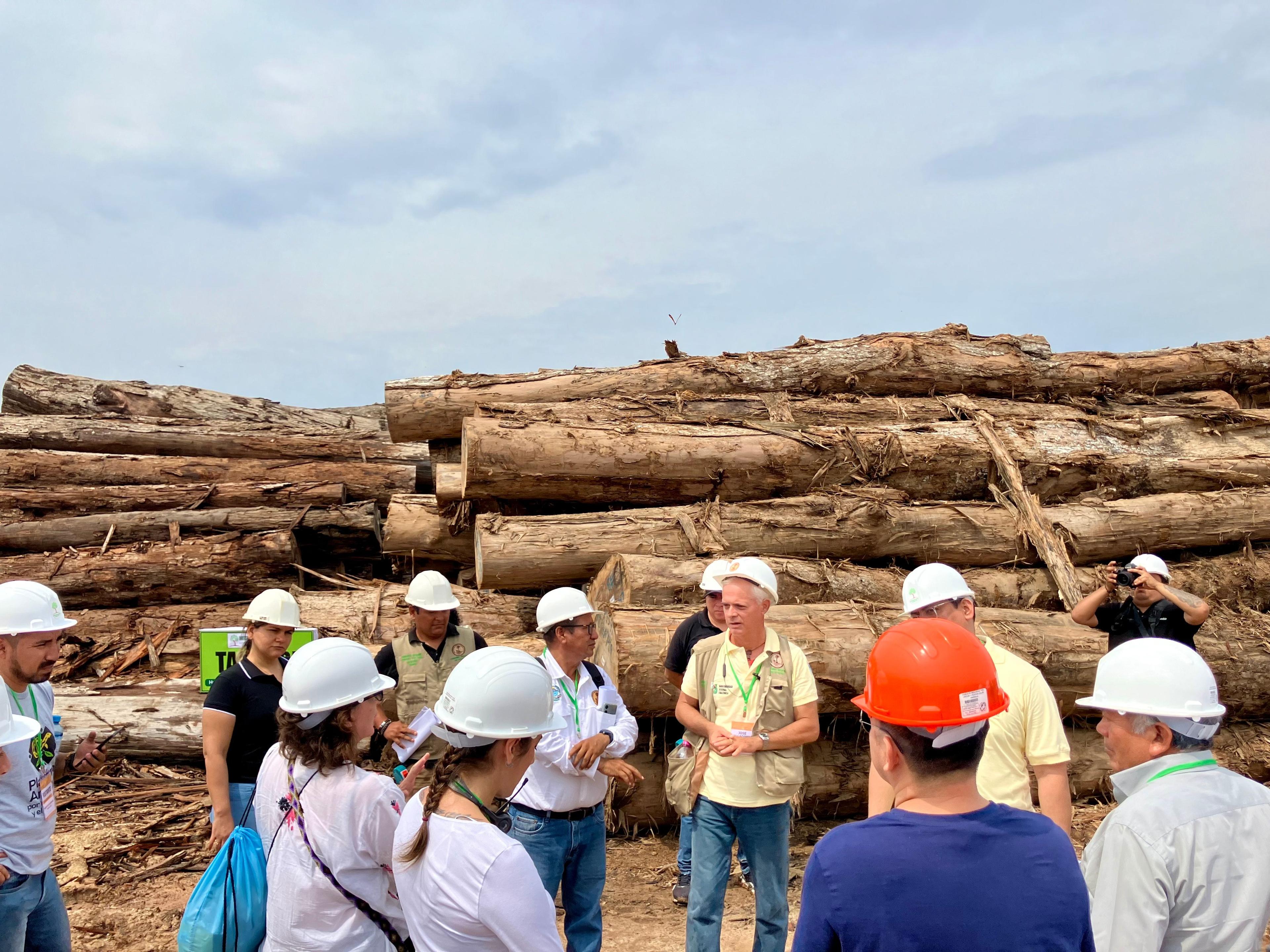
Forest engineers from a timber management company brief GCF participants on log tracking. Photo by Daniel Melling
At one of Pucallpa’s largest sawmills, workers guided car-length logs through powerful saws, converting timber into uniform planks for sale in domestic and international markets as far away as China and Europe.
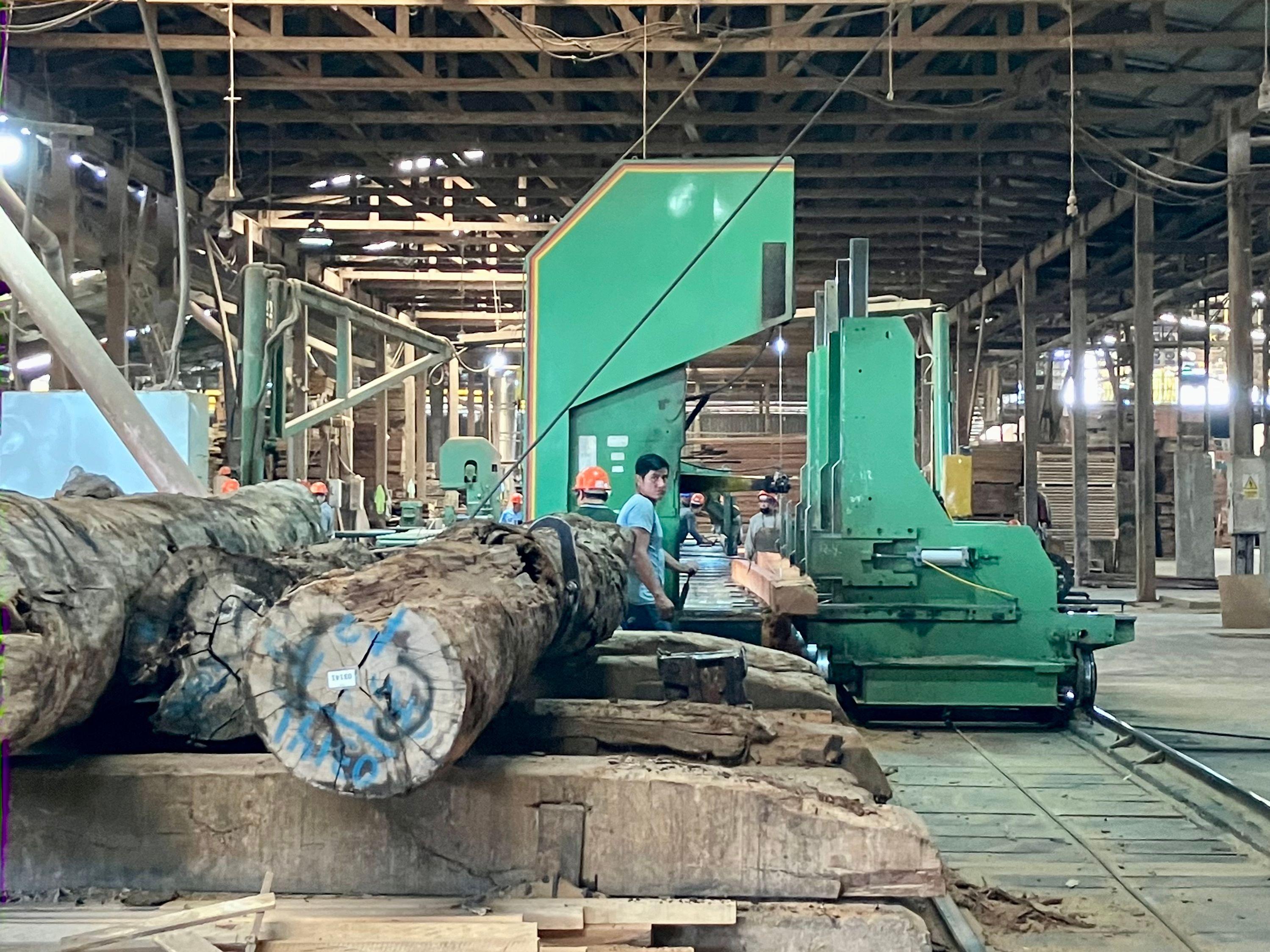
Lumber being processed at a sawmill in Pucallpa in preparation for sale through domestic and international markets. Photo by Daniel Melling
During a visit to CITE Peru, a government-backed center for technology and innovation, technical experts demonstrated scientific tools for identifying tree species, and entrepreneurs showcased their businesses converting timber into artisanal products for sale.
Later, at an indigenous-led furniture workshop, staff demonstrated a production line for wooden desks and chairs for local elementary schools, built with local Ucayali timber to state-standard specifications.
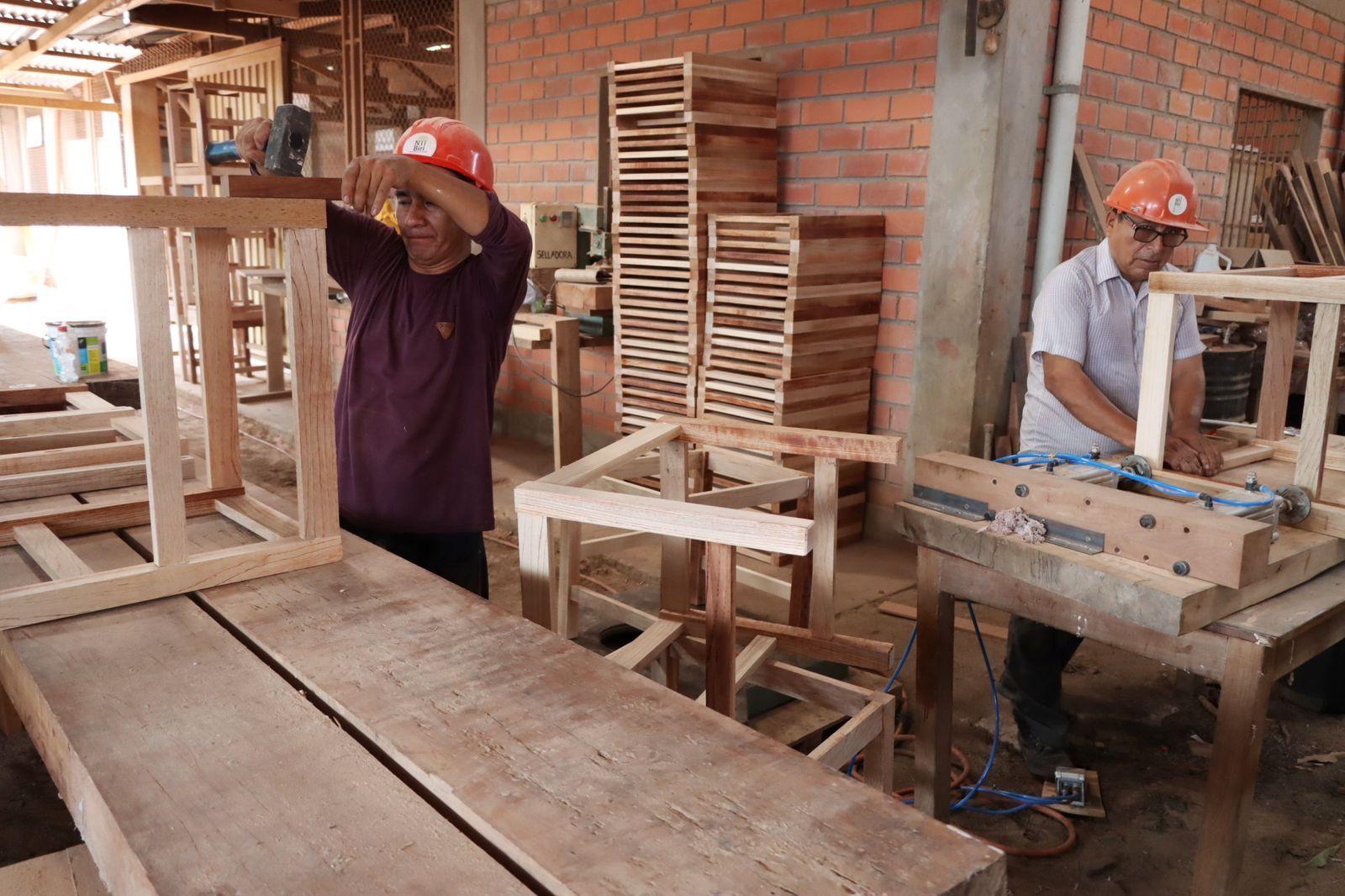
At a furniture workshop in Pucallpa, workers produce desks for local schools. Photo by José Francisco León.
The highlight of the tour was a surprise visit to a school, where more than 500 enthusiastic students greeted our delegation at an outdoor assembly and Governor Gambini presented the Pucallpa-made furniture.

(left) Governor Gambini presents locally made desks and chairs at a school assembly. (right) Students perform for a school assembly in Pucallpa. Photos by Daniel Melling
The Pucallpa conference highlighted the political and economic challenge of transforming land use in tropical regions to reduce deforestation and restore ecosystems, which the IPCC has hailed as among the largest climate mitigation opportunities this decade.
A policy community obsessed with speed, technology, and scale must recognize the local differences and economic realities of forests and land management, said William Boyd, project lead of the GCF Task Force and a professor of law at UCLA, in remarks at the conference.
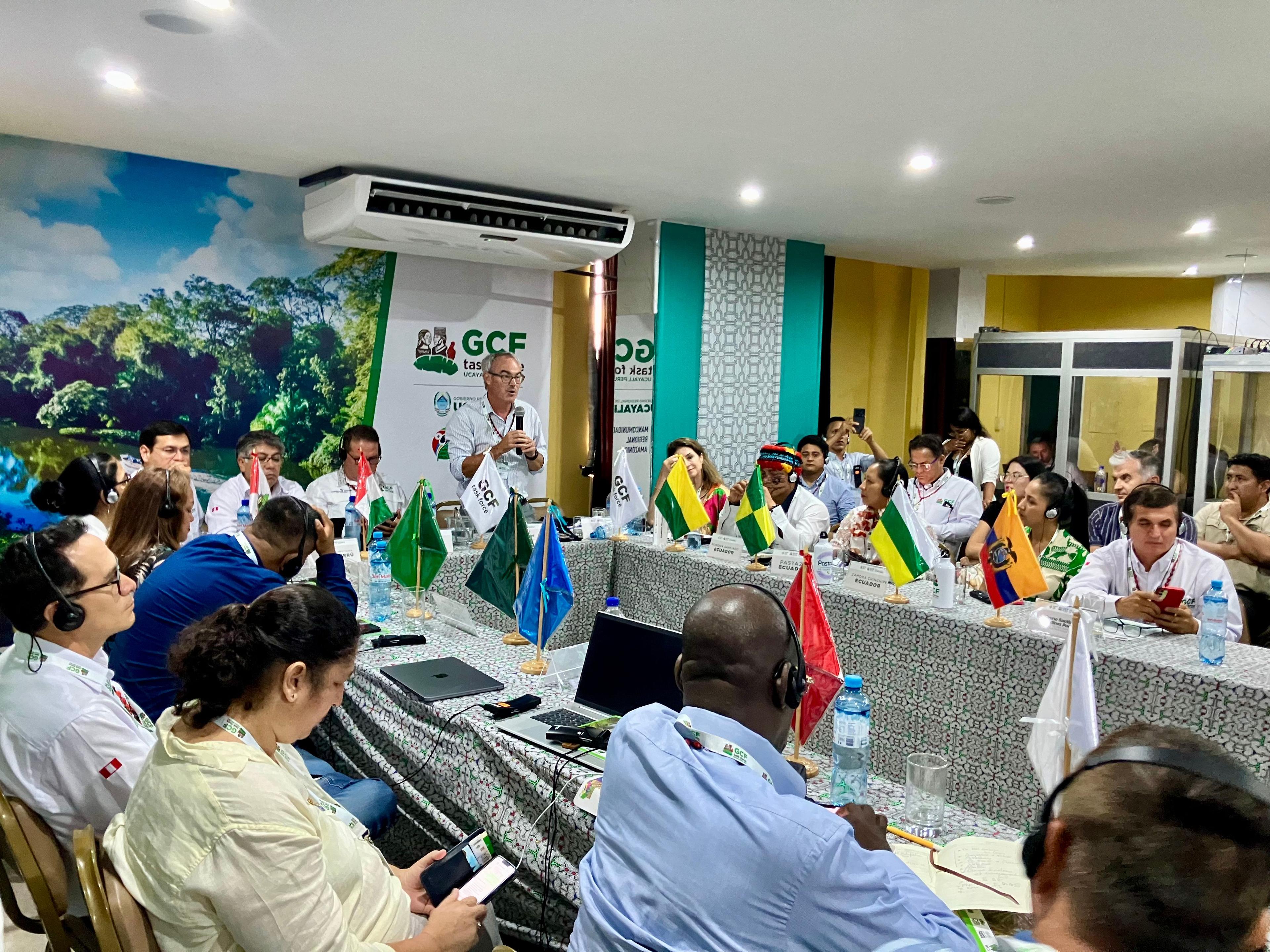
William Boyd, project lead for the GCF Task Force and a professor at UCLA, addresses delegates at the annual meeting. Photo by Daniel Melling
In a dynamic global economy and shifting climate conditions, each tropical forest jurisdiction must navigate its own path towards sustainable management of forests. But international partners can step up to help accelerate the transition – whether through finance, policy, or technology support.
Whatever path states pursue to reduce deforestation and restore degraded ecosystems, high-quality data will be necessary to track progress. CTrees’ partnership with the GCF Task Force is bringing advanced data tools to civil servants in Mexico, Côte d’Ivoire, Bolivia, and other countries to measure carbon and monitor deforestation and degradation.

CTrees' head of marketing, Daniel Melling, demonstrates the recently launched REDD+AI. Photo by Yohannaliz Vega Auqui
With COP29 taking place in Baku, Azerbaijan next week, there will no doubt be a familiar cycle of expectation and disappointment at the slow progress of ‘high-level’ international cooperation. In local jurisdictions, however, state officials and their partners are leading the transition to new models of forest governance, testing innovative approaches to resource management, and experimenting with industries that provide sustainable livelihoods while reducing pressure on the tropical forests so vital to our global climate system.


