
In the race to address tropical deforestation, policymakers have looked to a range of solutions: jurisdictional policy and conservation projects, voluntary actions in sustainable agriculture, land tenure reforms, legal enforcement, and more. But forest loss remains high and finance is only a fraction of what scientists say is needed.
The urgency to protect standing forests has spurred Brazil to champion the Tropical Forest Forever Facility (TFFF), an ambitious proposal to transform tropical forest protection through an innovative $125 billion investment mechanism. Set to launch at COP30 in November, the facility currently proposes to pay countries $4 per hectare each year for maintaining standing forests, potentially delivering $4 billion in annual conservation funding in perpetuity.
The facility emerges at a critical juncture for tropical forests and climate change. 2024 saw record-breaking tropical forest loss of 6.7 million hectares, nearly double 2023 levels, and scientific evidence shows that 10-47% of the Amazon could reach irreversible tipping points by 2050. Last year was the warmest on record, with global temperatures surpassing 1.5°C above pre-industrial levels for the first time.
Against this backdrop, Brazil has positioned the TFFF as both an innovative financial solution and an urgent response to planetary crisis.
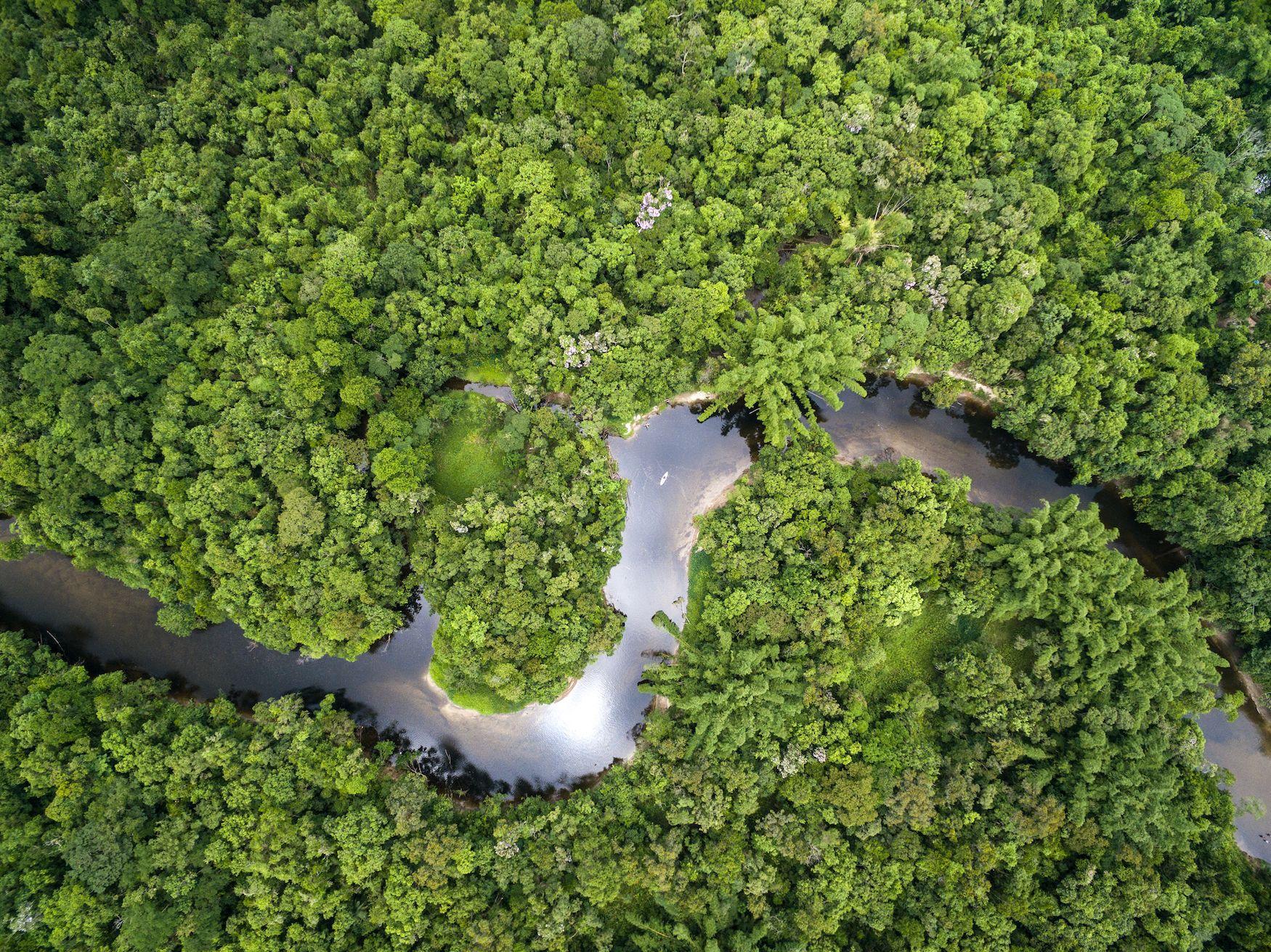
Aerial view of a forest in Brazil (Photo credit: Ildo Frazao/iStock).
Genesis of an innovative model
The original concept of TFFF was envisioned by a group of research institutions and NGOs in the 2010s, with Center for Global Development publishing a concept for a sovereign wealth fund-like mechanism in 2018.
Under President Lula's second administration, Brazil’s government embraced and expanded the idea. Brazil first unveiled the facility at COP28 in Dubai in 2023, presenting it as a paradigm shift from donation-dependent conservation to investment-driven forest protection. The proposal gained immediate international attention.
The timing reflects Brazil's climate strategy, building on a G20 presidency last year that emphasized sustainable development and poverty alleviation, and positioning COP30 in Belém as a defining moment for Amazon rainforest conservation. Hosting the climate conference at the gateway of the Amazon represents President Lula's vision to showcase the forest directly to global leaders while launching Brazil's flagship climate initiative.
Financial architecture: Leveraging investments for conservation
The TFFF's financial structure represents sophisticated engineering that leverages government credit to mobilize private capital. The $125 billion fund combines $25 billion in sponsor capital from developed countries with $100 billion raised through bond issuance to institutional investors, including pension funds, sovereign wealth funds, and insurance companies. A concept note issued by Brazil in February identified six potential sponsors: the United States, Norway, Germany, France, United Kingdom, and United Arab Emirates.
Sponsor capital would function as long-term loans, not grants, with 40-year repayment terms at 4.4-4.9% interest, making participation balance-sheet neutral for donor countries. This sponsor capital then leverages 4:1 to attract $100 billion in senior debt through AAA-rated bonds offering competitive returns to institutional investors.
The fund invests in diversified fixed-income portfolios targeting 7.5-7.6% annual returns. After paying investors their guaranteed returns, remaining profits of approximately $4 billion annually would flow to qualifying tropical forest countries. The facility would create a permanent endowment for forests – a revolutionary departure from traditional aid models that depend on continuous donor contributions.
Qualifying forest countries would receive $4 per hectare annually for maintaining forest cover above 20% canopy. The payment mechanism includes sharp penalties: $400-800 per hectare is deducted for each hectare deforested, creating a 100:1 punishment-to-reward ratio that strongly incentivizes conservation of standing forests.
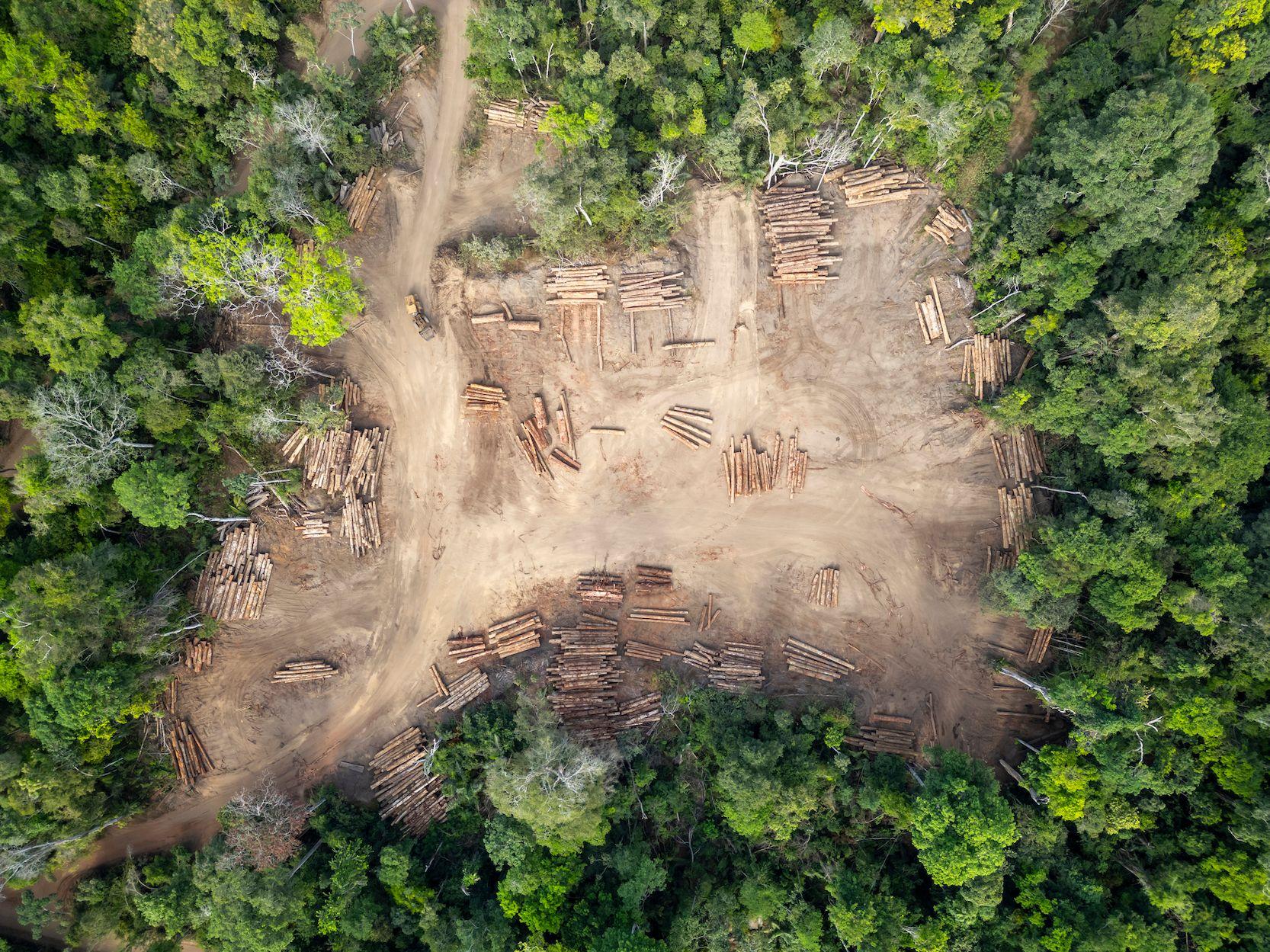
Logging yard surrounded by dense forest in the Brazilian Amazon (Photo credit: Tarcisio Schnaider/iStock).
Governance innovation and indigenous rights
The facility would operate through two structures, one to manage investments, and another to distribute benefits. The Tropical Forest Investment Fund (TFIF) Board would manage the $125 billion portfolio, overseeing loans, bonds, and investment returns. A separate Facility Board would govern country membership, forest monitoring, penalty enforcement, and payment distribution. The board would comprise 18 members, split equally between sponsoring countries and tropical forest nations.
A critical innovation is a mandatory 20% allocation to Indigenous Peoples and local communities amounting to approximately $800 million annually in the fully funded facility. The provision acknowledges that Indigenous-managed lands demonstrate superior conservation and climate mitigation outcomes.
The TFFF allocation would bypass conventional bureaucratic channels, providing direct finance similar to community funds like Brazil's Podáali Fund, Indonesia's Nusantara Fund, and Mesoamerica's Territorial Fund. Sonia Guajajara, Brazil's Minister of Indigenous Peoples is leading engagement with Indigenous organizations, including the Global Alliance of Territorial Communities, to strengthen the facility concept.
How TFFF is different
The TFFF would complement and enhance existing forest finance mechanisms. Current REDD+ programs reward projects or jurisdictions for reducing emissions through avoided deforestation and degradation, requiring complex assessments of additionality, leakage, and permanence.
In contrast, TFFF proposes direct payments to countries for maintaining standing forests using straightforward area-based metrics. The simplified approach offers immediate incentives for forest conservation while supporting countries in building capacities such as monitoring, enforcement, and verified emissions reductions, that are needed for future engagement in more complex, performance-based carbon markets.
The facility aims to provide predictable $4 per hectare payments regardless of market conditions, creating stable, long-term incentives for forest conservation. The permanent endowment structure contrasts with current project-based approaches, where finance ends once emission reduction targets are met.
If successful, the TFFF would dwarf existing forest funds: The Amazon Fund has mobilized over $900 million since 2008, while the Green Climate Fund has deployed $13.5 billion with co-financing. In fact, the TFFF's $125 billion target would exceed all existing multilateral climate funds combined, delivering more funding annually than most forest funds have raised in their entire existence.
International response: Support tempered by concerns
International reactions reflect the proposal's ambitious scope and innovative structure. Twelve countries, including tropical forest nations and potential sponsors, joined an interim steering committee in February to guide development of the TFFF concept. The World Bank is the leading candidate to serve as trustee and host institution, as the bank has previously explored hosting a similar mechanism.
Some civil society organizations have raised objections to the fund. The Global Forest Coalition, a coalition of nonprofits and Indigenous Peoples’ organizations, released a report in April calling for outright rejection of the facility, criticizing it as “another misguided false solution prioritizing profits over ecological preservation.” The coalition’s concerns include financial risks from market volatility, insufficient Indigenous rights protections, and potential for greenwashing.
Others offer cautious support. In a report in May, Greenpeace International called TFFF "a breakthrough in forest protection" while demanding stronger governance, Indigenous rights protection, and environmental safeguards.
Forest finance experts remain divided. In a Mongabay interview, Charlotte Streck, co-founder and partner at Climate Focus, highlighted the TFFF’s country ownership and the innovative investment model versus conventional donations as positives. Frederic Hache, executive director of the Green Finance Observatory, has raised concerns about the long-term sustainability of the investment model and its resilience amid economic volatility.
Implementation challenges await
The facility faces several implementation challenges, first among them, securing the full $25 billion in sponsor commitments in a period of drastic changes to donor countries’ development finance priorities.
The facility's success also depends on investor appetite for forest-linked bonds, a new asset class. While institutional investors have shown growing interest in impact investments, the TFFF’s $100 billion scale far exceeds any previous climate or nature bond issuances.
Once established, the mechanism’s sustainability depends on maintaining 7.5% average investment returns over decades, making the facility vulnerable to market volatility and economic downturns, and undermining the predictability that is the facility's key advantage over traditional mechanisms.
Currency risks pose additional challenges, as payments in U.S. dollars to developing countries could create exchange rate volatility affecting real purchasing power. Inflationary pressures could also erode the $4 per hectare payment value over time without adjustment mechanisms.
Operational challenges may arise when developing robust governance structures across multiple countries and constituencies, and ensuring payments reach intended beneficiaries, including Indigenous communities with limited institutional capacity. And on the technical side, countries will need to establish effective satellite monitoring systems, including integration of cutting-edge technologies that distinguish forest degradation from deforestation.
Addressing gaps in technical capacity will be important for countries to verify results and facilitate financial flows from the TFFF. Last year, CTrees launched the world’s first system to map and quantify the full extent to which human activities have degraded tropical forests in recent years, attributing changes to logging, fire, and road construction. Such innovations will prove immensely valuable as TFFF moves from concept to reality.
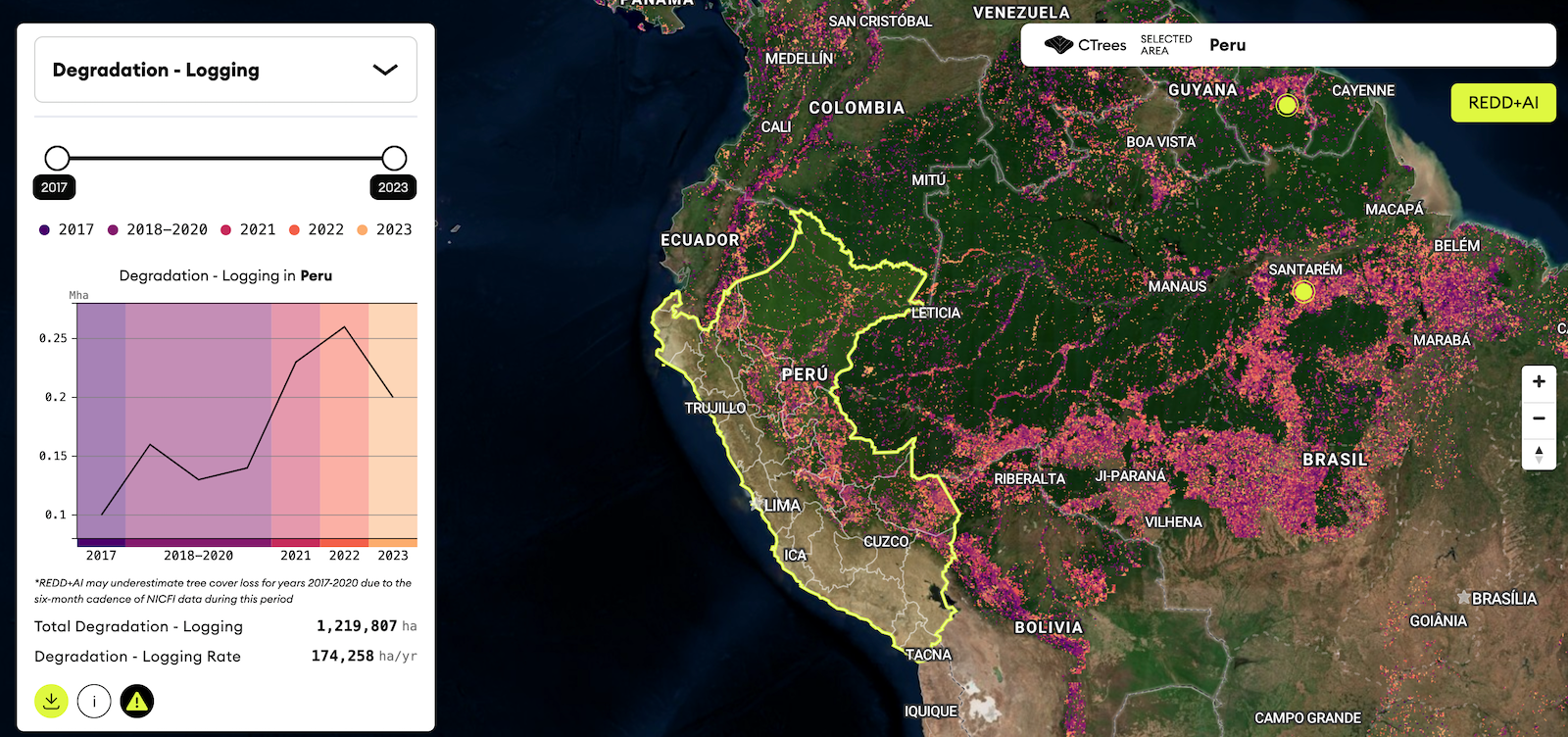
CTrees' REDD+AI platform quantifies tropical forest degradation from individual drivers such as logging.
At COP30, a test for climate finance
COP30 in Belém is a make-or-break moment for the TFFF. Brazil has invested tremendous political capital in the facility's success, with President Lula making it central to the country's climate agenda and international leadership aspirations.
The next four months will test whether the international community can mobilize capital at the scale required for meaningful climate finance while addressing legitimate concerns about governance, Indigenous rights, and financial sustainability.
At a time of unprecedented urgency for tropical forests, TFFF's bold ambition may be precisely what's required. Its success would make COP30 a defining moment for both the Amazon and global climate action, for decades to come.


